
Choose yoga-legging fabric by matching its force, stretch recovery, coverage, moisture behavior, and wash stability to the intended fit and body zones. Composition and GSM help define candidates, but neither can confirm squat coverage, support, or long-term shape retention without controlled fabric and garment testing.
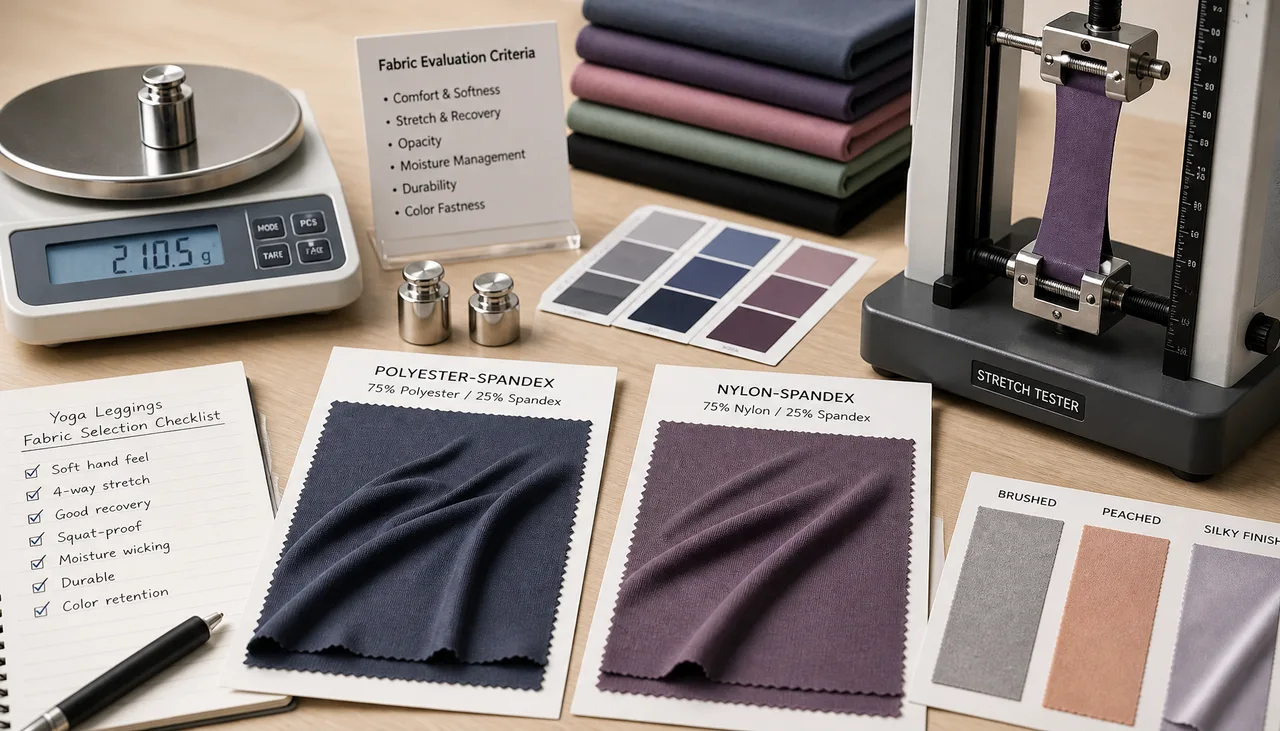
Define the legging before selecting the fabric
Start with the use case: low-impact yoga, studio-to-street wear, hot-weather training, or a higher-support legging. Record the rise, waistband construction, target compression, color range, size range, care label, and expected extension at the seat, thigh, knee, and waistband.
A soft fabric may suit a comfort-led collection but provide insufficient force for a sculpting fit. A firmer fabric can improve support while increasing dressing effort and seam stress. The buyer must choose the tradeoff deliberately rather than ask for the “best” legging fabric.
Compare nylon-spandex and polyester-spandex as starting points
Nylon-spandex is often considered when a smooth, soft hand is important. Polyester-spandex can be considered for constructions targeting repeated training use or specific moisture behavior. These are screening tendencies, not guarantees.
Yarn type, knit construction, spandex placement, dyeing, and finishing can make two fabrics with the same blend behave differently. Compare finished samples under the same conditions and specify any required moisture, abrasion, or colorfastness result separately.
Evaluate coverage at garment-relevant extension
Opacity should be assessed in the selected color and at the extension expected during a squat. Inspect the fabric over a controlled contrasting background and confirm the result in a fitted garment under consistent lighting. A relaxed swatch or one dark color cannot represent the whole color range.
GSM influences mass and often coverage, but a heavier fabric is not automatically squat-proof. Yarn size, loop density, thickness, color, and extension determine how much the structure opens.
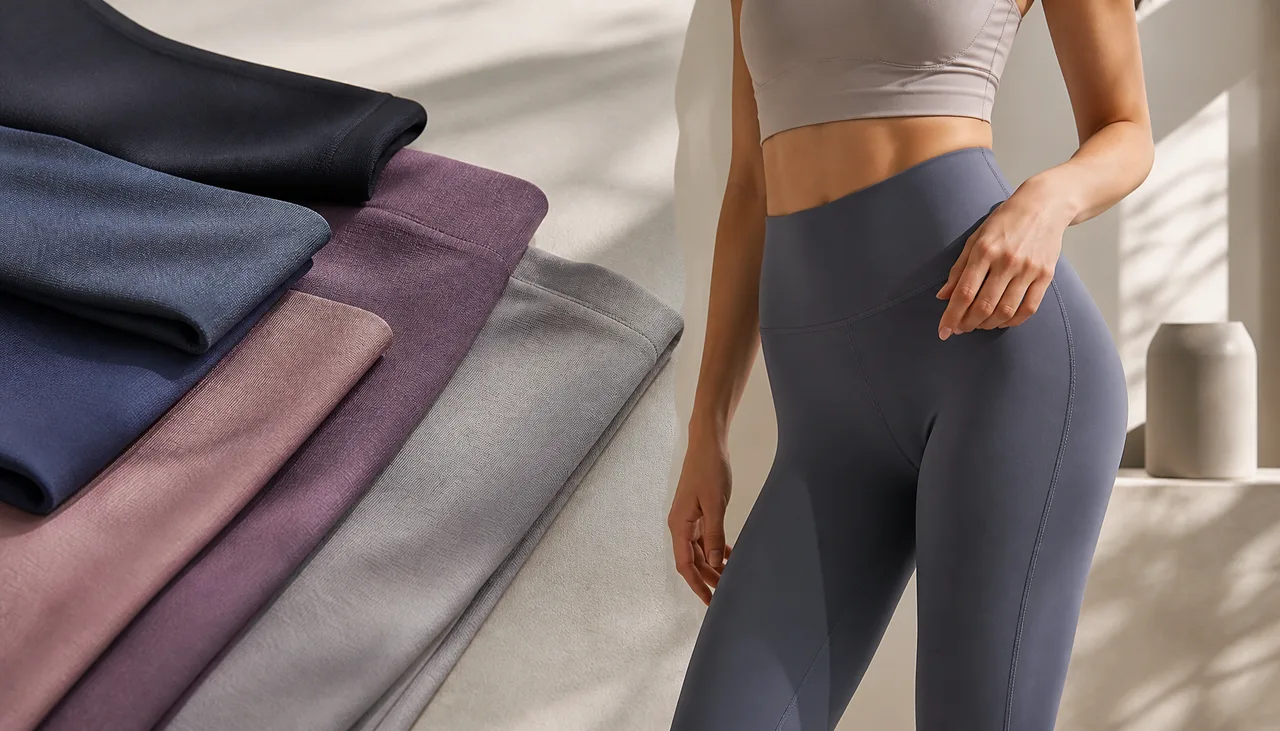
Measure stretch, force, recovery, and growth
Maximum stretch shows how far the fabric can extend, not how it feels at normal wear extension or how well it returns. Record test direction, load or extension, cycles, hold time, recovery time, and conditioning. Measure residual growth separately and repeat the relevant checks after the intended wash cycle.
The garment sample must validate waistband hold, knee recovery, seam appearance, and comfort. Pattern reduction and seam construction can change fit even when fabric results remain within tolerance.
Approve surface and care performance
For yoga leggings, review pilling, abrasion, snagging, crocking, perspiration colorfastness, dimensional stability, and spirality as relevant to the product brief. If brushed, cooling, wicking, or anti-odor finishes are requested, confirm whether they are standard or optional and define how performance will be evaluated after laundering.
Send a comparable sourcing brief
Include:
- garment use, fit, size range, and critical body-zone extension;
- target composition, construction, finished GSM, width, hand, and color;
- stretch, force, recovery, and residual-growth conditions;
- coverage requirement and assessment setup;
- wash route and dimensional tolerances;
- relevant durability and colorfastness tests;
- sample identification and bulk-lot traceability.
Procurement next step
Request two or more identified candidates against the same brief, then compare fabric data, sewn panels, and washed garment samples. ClothFactory can match an existing nylon-spandex or polyester-spandex base fabric or discuss development changes, but bulk approval should follow a written specification and sealed sample rather than a composition name or hand-feel preference alone.