
Shortlist a nylon-spandex double-knit with a matte face or a smooth double-sided interlock. Approve the fabric only after checks on a legging sample at the intended fit. Catalogue descriptions help select candidates, but opacity and compression under stretch remain sample decisions.
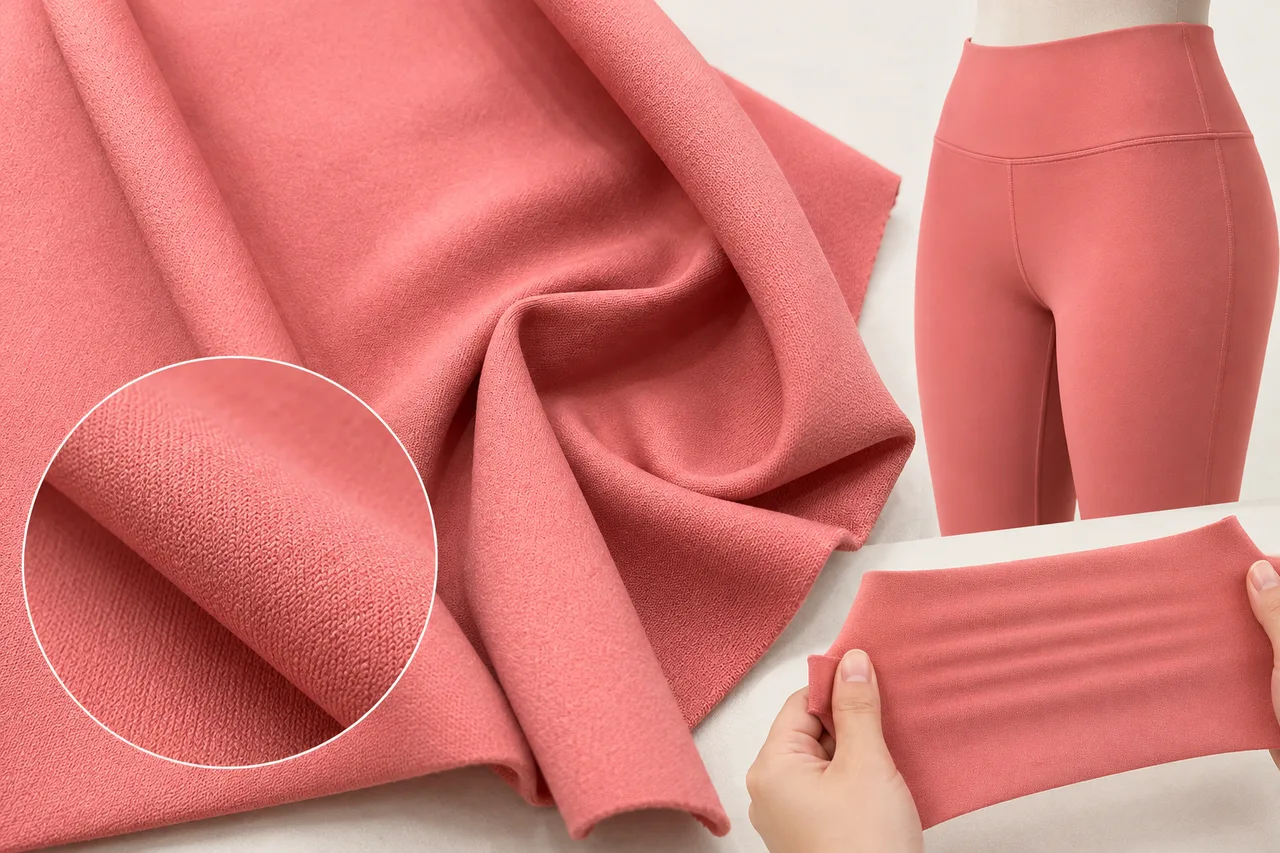
Candidate Constructions for High-Compression, Four-Way-Stretch Yoga Leggings
Use H2894 Matte Performance Double-Knit as the catalogue matte double-knit reference. The table compares it with a smooth-surfaced interlock and a ribbed option. These are sampling candidates, not interchangeable approvals: the ribbed face suits a different surface brief.
Catalogue parameters and listed features for sampling candidates; features are descriptions, not measured garment results.
| Catalogue model | Catalogue composition and construction | Catalogue weight and nominal width | Listed surface or recovery feature |
|---|---|---|---|
| Catalogue model: H2894 | Catalogue composition: 75% nylon, 25% spandex; matte double-knit | Catalogue parameters: 230 GSM; 165cm nominal width | Catalogue features: full opaque, superior matte finish, high recovery compression |
| Catalogue model: H113 | Catalogue composition: 72% nylon, 28% spandex; double-sided interlock | Catalogue parameters: 220-230 GSM; 165cm nominal width | Catalogue features: shark-skin texture, high shape retention; description lists four-way stretch |
| Catalogue model: H3827 | Catalogue composition: 75% nylon, 25% spandex; ribbed fabric | Catalogue parameters: 220 GSM; 150cm nominal width | Catalogue features: four-way stretch, ribbed texture, high recovery |
Select the knit face before comparing quotes. A flat, matte appearance points toward the double-knit; a sleek surface makes the interlock worth sampling. Keep the ribbed construction only if visible texture is acceptable.
How Weight, Density, and Stretch Conditions Drive Opacity
Catalogue weight describes fabric mass per area. It does not tell a buyer how much coverage remains when the panels stretch across the seat and thigh. Knit structure and the extension imposed by the pattern also affect what the wearer sees. Inspect each candidate over a consistent backing at the extension expected in the intended size and fit. Record the viewing conditions and approve coverage on that basis, including during a squat. A heavier catalogue option may change hand feel or material use without resolving show-through.
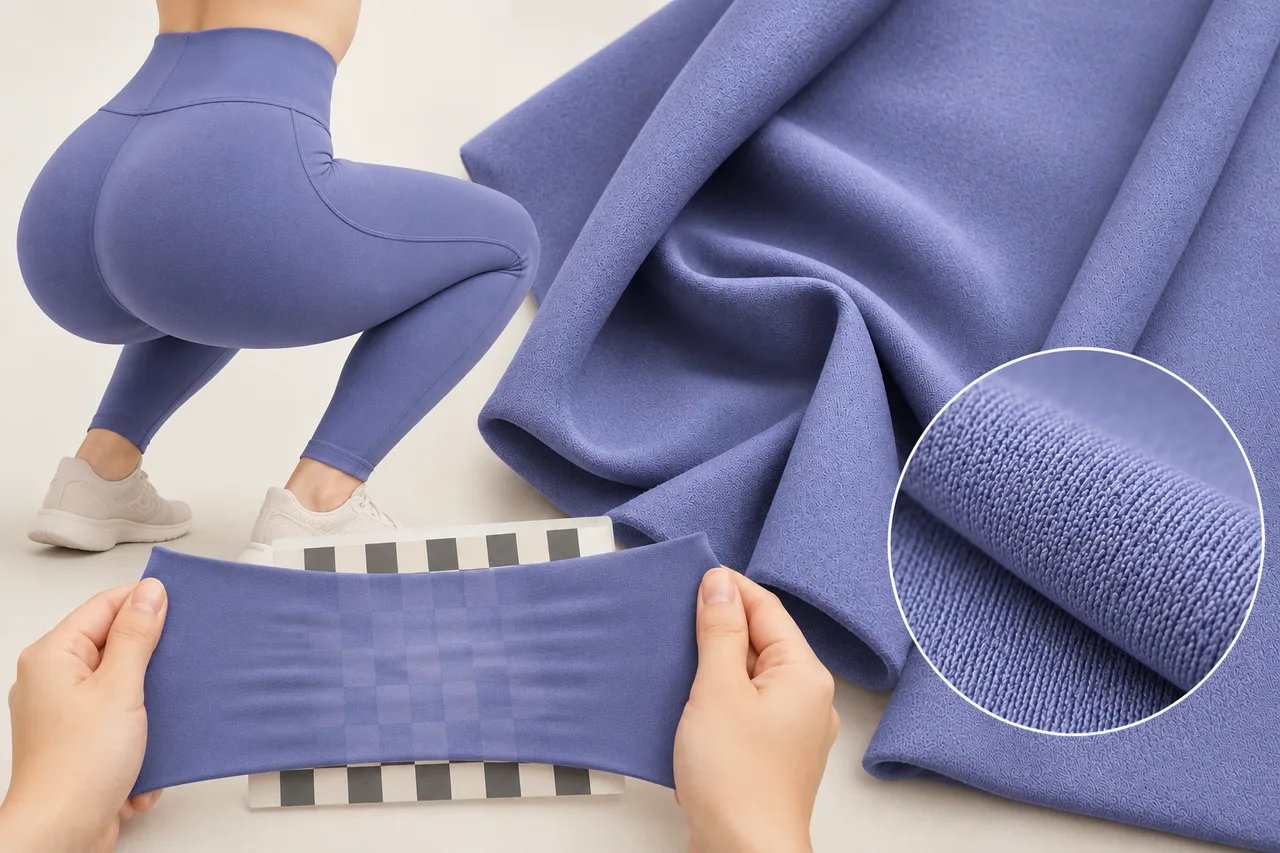
Surface Finish: Matching Matte, Smooth, or Ribbed Character to the Design Brief
Use H113 Shark-Skin Double-Sided Interlock as the catalogue smooth-surface comparison. Its description also calls the face shark-skin textured, so compare an actual swatch with the matte double-knit under the lighting used for approval. Check sheen after stretching the panel; a surface that looks suitable at rest may look different on the garment.
Recovery and Compression Trade-Offs Across Candidate Elastane Levels
Catalogue elastane percentages and listed recovery features identify candidates, but they do not establish the pressure or fit of a finished legging. Stretch each sample in both fabric directions, release it, and compare its return with the approved fit target after repeated extensions. Use H3827 LULU High-Stretch Rib Fabric as a catalogue ribbed recovery reference only when that texture fits the design. If the standard constructions miss the target, a supplier development brief can specify the required structure, hand feel, stretch, and recovery.
Sample and Pre-Production Checks Before Bulk Commitment
Set the fit target, backing, lighting, and surface reference when the sample is approved. The same conditions give the factory a clear pre-production comparison. Hold a candidate for adjustment when coverage, recovery, or appearance misses the agreed target; approve bulk only against the accepted fabric and garment sample.
Proposed pre-production checks against the buyer’s agreed legging target; no results are implied.
| Check | Observable signal | Approval decision |
|---|---|---|
| Coverage at intended fit | See-through areas during extension and a squat, viewed against the agreed backing | Approve if coverage meets the agreed target; otherwise hold for fabric or fit adjustment |
| Stretch and recovery | Movement in both fabric directions and return after repeated extension | Approve if movement and return match the agreed fit target; otherwise hold for adjustment |
| Surface at rest and under stretch | Sheen and visible texture under the agreed lighting | Approve if the appearance matches the accepted surface reference; otherwise reject that finish |
Cost and MOQ Implications of Each Candidate Construction
Catalogue parameter: the minimum order quantity is 200 KG for each candidate. Catalogue parameters: stated yields are 2.6m/kg for the matte double-knit, 2.7m/kg for the interlock, and 3.0m/kg for the ribbed fabric. These figures do not rank cost per legging. Compare supplier prices and marker consumption on the same pattern, size mix, and quality requirement; usable cutting width and actual fabric use determine the purchase estimate.