
Fish-Scale Pique Nylon Spandex Fabric is a 180 g/m² knit (83% nylon, 17% spandex, 165 cm nominal width) that gives performance polos a distinctive surface. The texture should be approved together with stretch, dimensional stability, snagging risk and moisture-management requirements. Buyers should treat visual ventilation and actual drying performance as separate questions unless comparable test data confirms both.
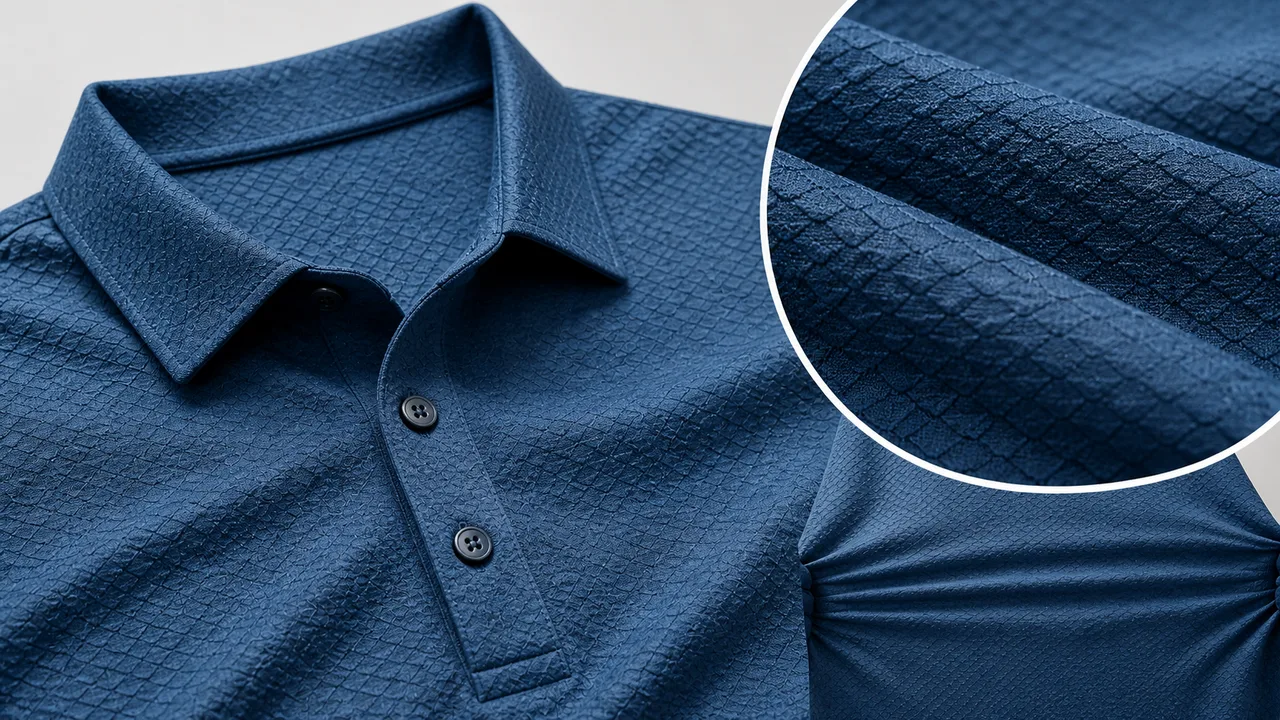
Why the Texture Matters
The fish-scale effect creates highlights and shadow across a solid color, helping a polo look differentiated without relying on a printed graphic. “Bio-Armor” is a trade name; it does not by itself establish biological origin, antimicrobial performance or certification. The same relief can influence collar compatibility, placket appearance and contact abrasion. Review the pattern at garment scale because a texture that looks balanced on a small swatch may appear too dominant across a full front panel or distort around seams. Catalogue values are nominal; confirm finished GSM and usable width on the approval sample.
Convert the Design Brief Into Specifications
Do not source this fabric by surface name alone. State the required fiber composition, finished GSM, usable width, stretch direction, recovery condition, hand feel, color and care procedure. If airflow, quick drying or moisture management is important, identify the required test method and acceptance condition. A textured surface can create air spaces, but that observation does not by itself establish a performance claim.
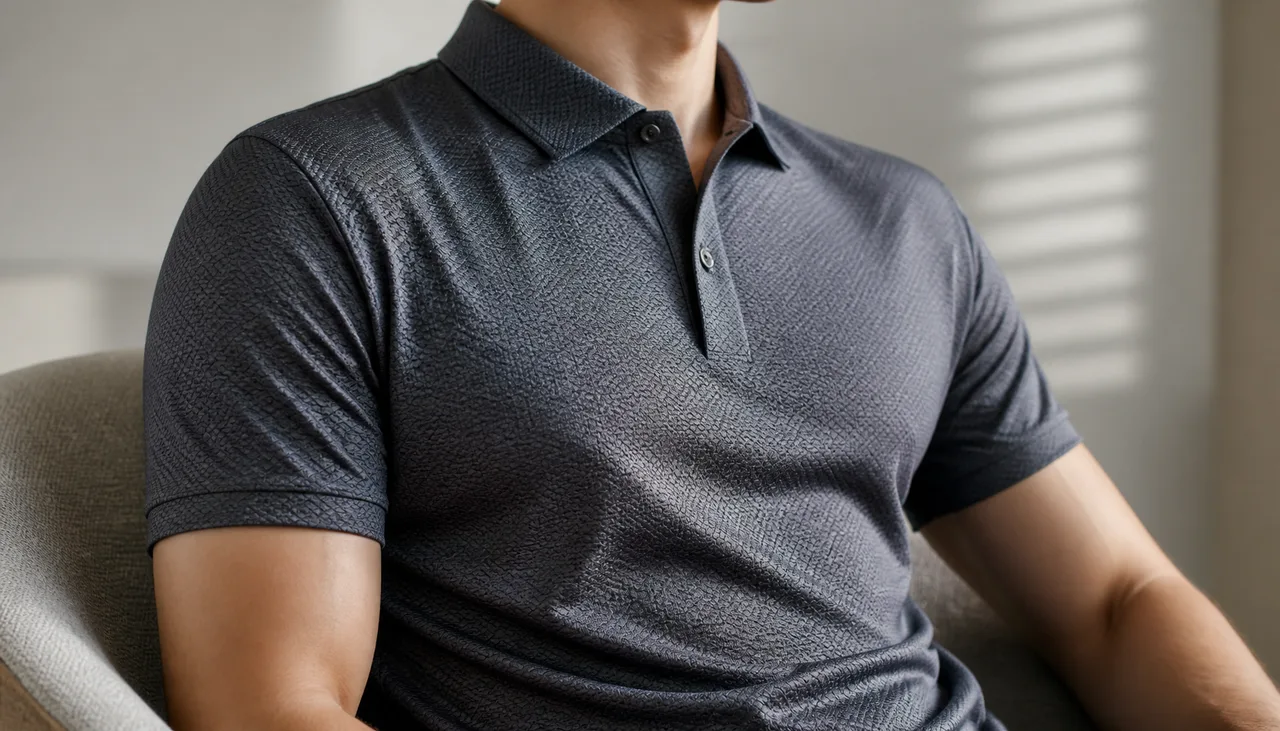
Evaluate the Polo as a System
The body fabric must work with the collar, placket, interlining, thread and seam construction. A soft, extensible body paired with a rigid collar may pull out of alignment after laundering; a heavier texture may also affect placket drape. Produce a sewn prototype and check front-panel hang, collar balance, seam puckering, recovery at the hem and dimensional change under the intended care cycle. For a related polo quality, see fine-rib nylon spandex for performance polo shirts.
Compare Commercial Risk, Not Just Price
Two textured fabrics with similar quoted GSM can produce different usable yields if their widths, shrinkage allowances or defect rates differ. Use the same pattern and size ratio for marker comparison, and calculate consumption from usable rather than nominal width. A lower price per kilogram can be offset by extra cutting loss, shade separation or rejected panels, so the purchase decision should use acceptable-garment cost.
Buyer Risk Check
- Confirm whether the texture remains clear after dyeing and finishing.
- Check snagging and pilling at shoulder, underarm and bag-contact zones.
- Evaluate shade under more than one lighting condition.
- Test darker and lighter colorways separately when appearance or heat exposure matters.
- Require bulk to match the approved construction and finishing route.
Sampling Brief
Send the polo silhouette, intended market, target hand feel, GSM and width requirements, color standard, stretch direction and care label. Add separate acceptance criteria for dimensional stability, colorfastness, pilling or snagging, and any claimed moisture function. ClothFactory can use that brief, submitted through the contact page, to assess the fabric without presenting an unverified surface effect as confirmed performance.