
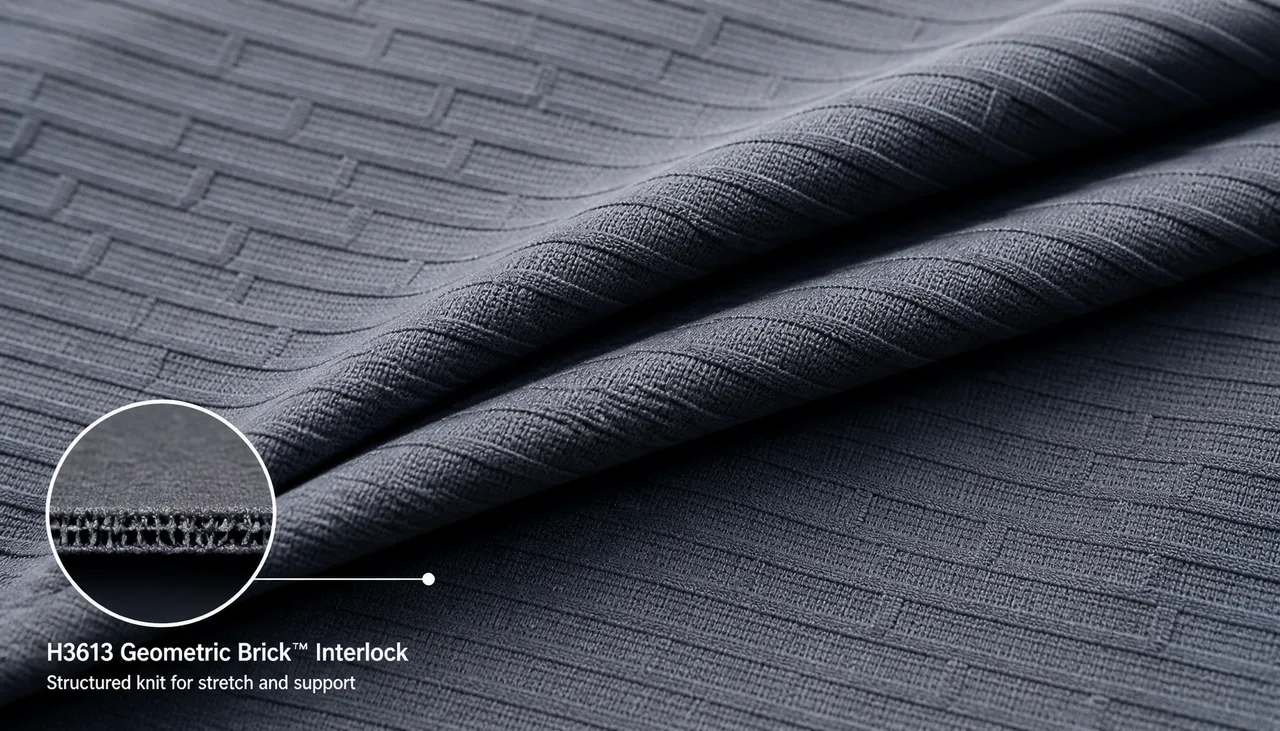
Precision Fine-Grid Interlock is a 165 g/m² nylon-spandex interlock (78% nylon, 22% spandex, 165 cm nominal width) for activewear that needs a visibly structured surface, controlled stretch and more body than a lightweight jersey. Its raised geometric brick pattern is a visual feature, not proof of compression or support. Buyers should qualify the fabric through finished measurements and garment trials because appearance alone does not establish recovery, pilling resistance or wash stability.
Where This Structure Fits
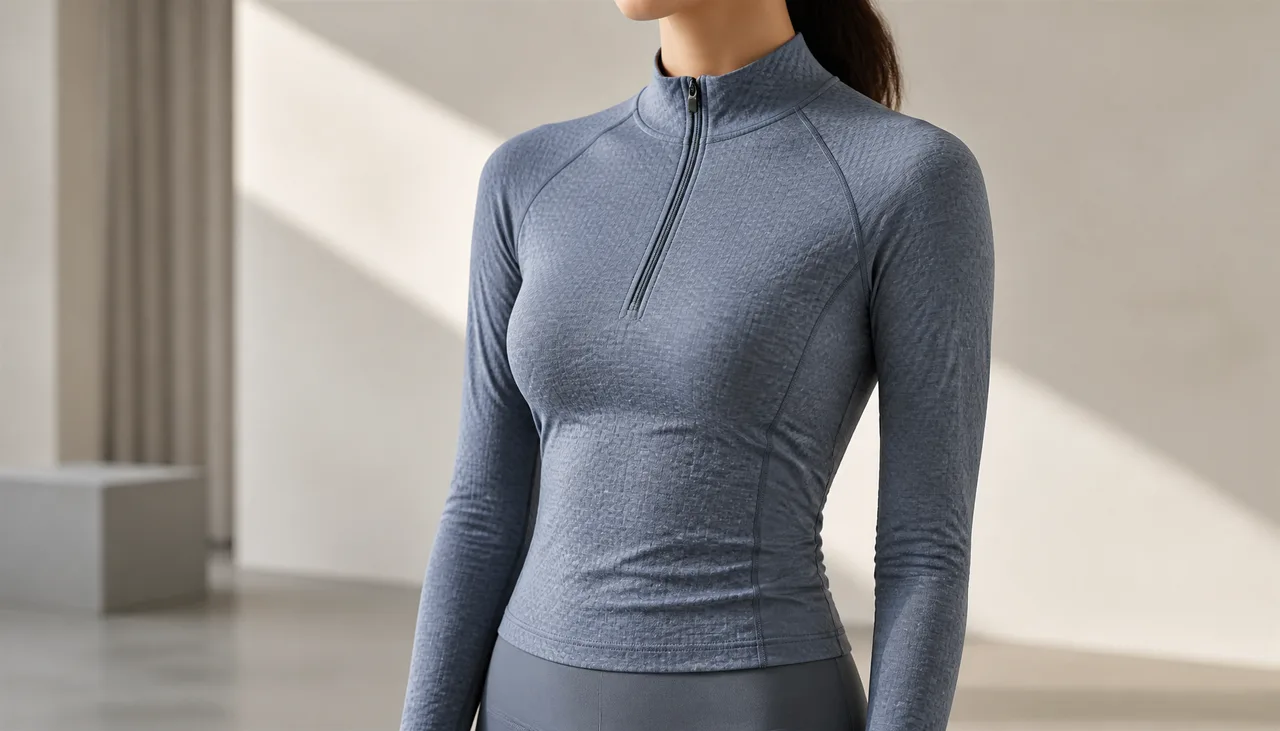
The raised geometric surface can support sports bras, fitted training tops, leggings panels and shapewear details where visual texture is part of the design brief. Interlock construction generally provides a more stable face and back than a single jersey, but the finished result still depends on yarn selection, stitch density, elastane content and finishing. A buyer should describe the garment zone, target support and required stretch direction instead of requesting “structured fabric” without measurable conditions. Treat the catalogue GSM and width as nominal until they are verified on the approval sample.
Separate Appearance From Performance
Texture changes how light and color move across a garment, which can make a solid shade look more dimensional. It can also affect printing, bonding, seam appearance and abrasion at raised points. None of those effects can be accepted from a swatch photograph. Review the fabric flat, stretched and sewn, then assess whether the motif distorts at the extension expected in the finished garment.
Build a Comparable Sample Request
Ask the supplier to state fiber composition, finished GSM, usable width, stretch and recovery by direction, color, surface finish and applicable care conditions. Define how the sample will be evaluated: relaxed and stretched appearance, opacity, seam response, dimensional change after laundering and surface change after abrasion or pilling exposure. The sampling basis for the stretch element is covered in how many samples buyers should test for stretch ratio. Functional finishes should be listed separately and treated as optional until their application and durability are confirmed.
Use a Garment-Level Decision
A lab result cannot show whether the textured surface remains balanced across curved panels or under elastic tension. Cut the candidate into the intended pattern, keep seam type and sewing settings consistent, and compare fit after the same conditioning and wash sequence. For an illustrative comparison, if two samples have equal relaxed width but one grows after repeated extension, the apparently similar fabrics will not hold the same garment dimensions.
Buyer Risk Check
- Do not infer compression from a firm hand feel.
- Do not approve bulk color from an unconditioned digital image.
- Do not compare stretch percentages measured with different loads or holding times.
- Check raised areas for snagging, glazing and visible wear at garment contact points.
- Confirm that the approved sample represents the same yarn, construction and finish planned for bulk production.
Information to Send Before Sampling
Provide the garment type, panel location, target GSM and usable width, required stretch directions, intended color, desired surface definition, care procedure and acceptance tests. Submit those requirements to ClothFactory through the contact page, and ClothFactory can then screen Precision Fine-Grid Interlock and prepare an appropriate sample. Bulk approval should follow only after the physical fabric and sewn prototype meet the written specification.