
Gym-shorts development is most often delayed when the fabric brief leaves stretch, recovery, coverage, usable width, dimensional stability or finishing performance undefined. The fastest corrective action is not to request more random swatches, but to identify the failed decision, set one measurable acceptance condition and retest a controlled candidate in the intended garment construction.
The Candidate Does Not Match the Garment Zone
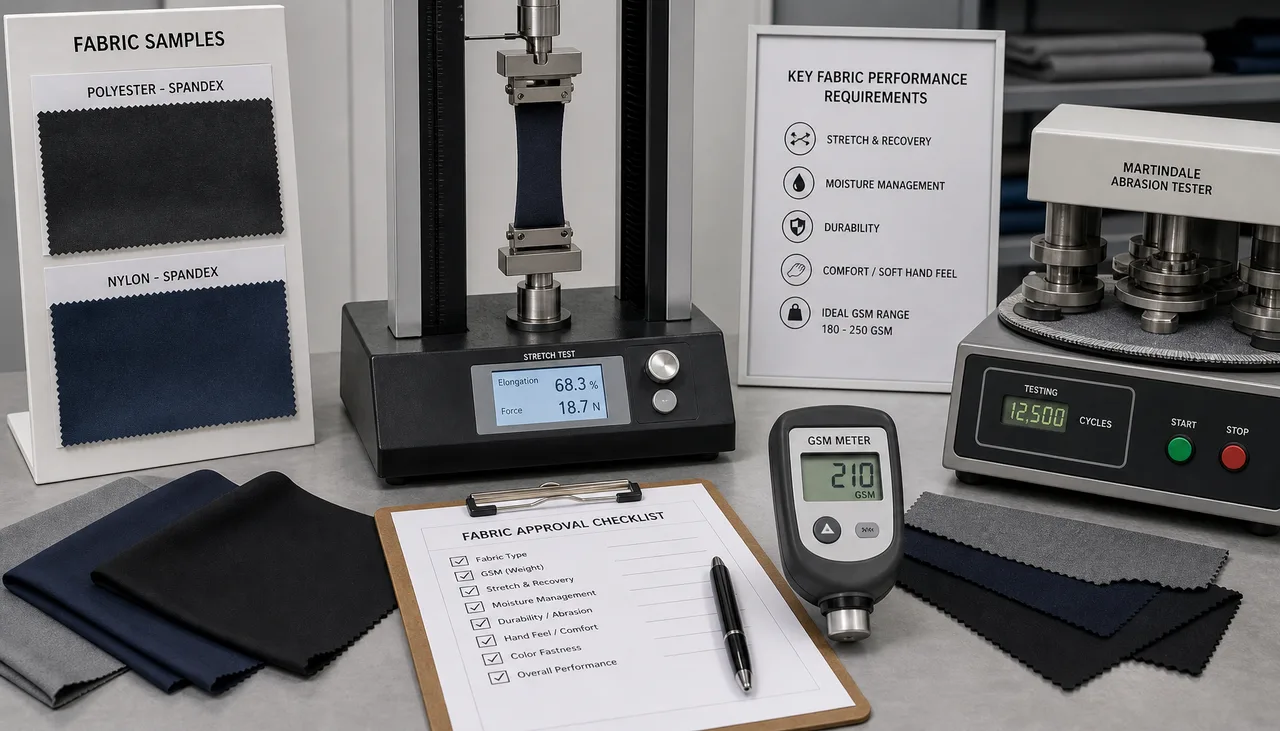
Loose training shorts, fitted cycling-style shorts and inner compression liners require different stretch, drape and coverage. Development stalls when one generic “gym shorts fabric” brief is used for all three. Map the shell, waistband, gusset and liner separately, then define whether each zone needs mobility, support, airflow, opacity or abrasion resistance. This narrows the sample set before color and styling work begins. A sample-review checklist is provided in what buyers should check when reviewing gym-shorts fabric samples.
Stretch Is Reported Without Recovery Conditions
A supplier may report a high extension value while the prototype grows at the seat or hem. The missing information is often load, holding time, direction and recovery interval. Use one agreed method and test both course and wale directions. Repeat movement on the sewn sample and measure whether critical dimensions return after rest; otherwise, the team may keep changing patterns to compensate for a material problem.
GSM Is Used as a Proxy for Coverage
Low GSM does not automatically mean transparent, and higher GSM does not guarantee opacity. Yarn, stitch density, color, finishing and strain all affect coverage. Evaluate the actual color while stretched to the garment’s measured extension over the intended liner or reference background. This prevents late rejection after a fashion color is approved on a relaxed swatch but fails during movement.
Finish and Care Conditions Arrive Too Late
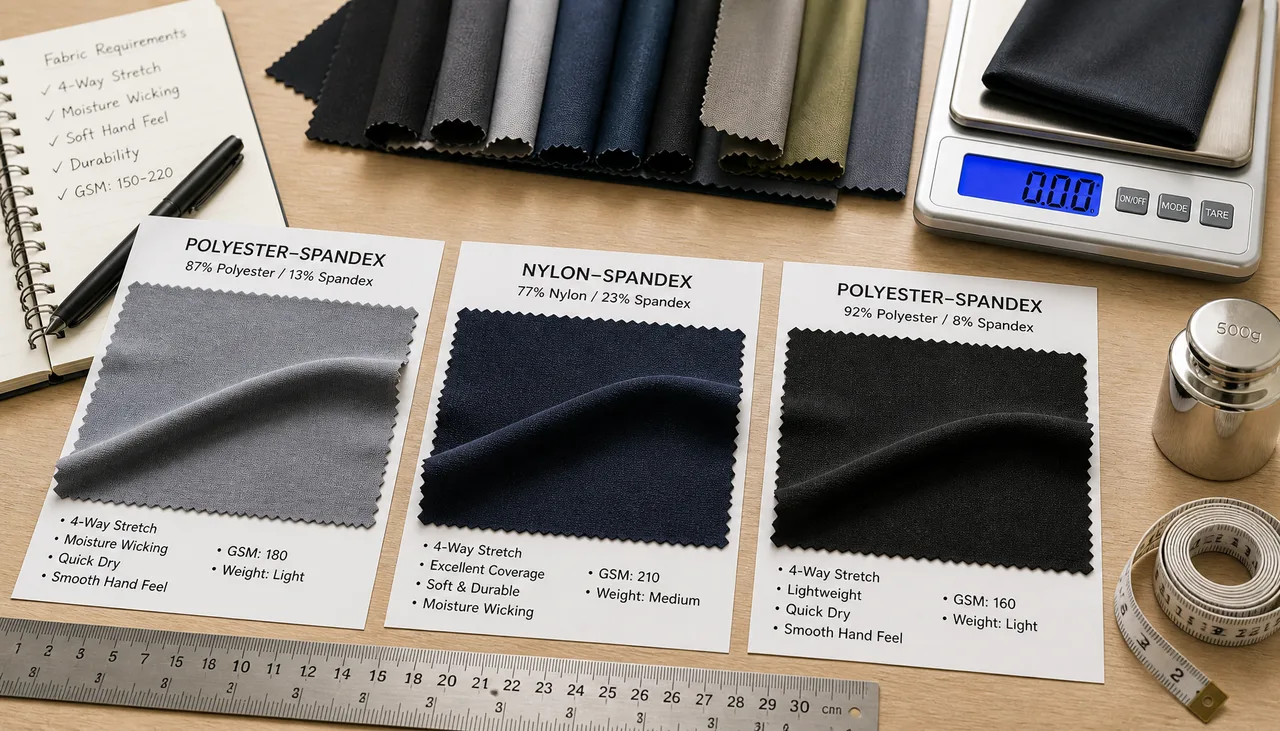
Brushing, wicking, cooling or antibacterial treatments can change hand feel, dimensions and sewing behavior. Delays occur when a base fabric is approved first and the finish is introduced after garment sampling. List optional finishes in the first brief, request the intended finishing route on sample yardage, and assess performance and appearance after the agreed wash sequence before bulk release.
The Fabric and Sewing Process Conflict
Needle damage, seam grin, puckering and edge curl can appear only after cutting. Use production-intended needles, thread, elastic and seam types during prototyping. If the fabric is changed, repeat the sewing trial instead of assuming similar composition means identical machinability. Record acceptable seam appearance and stretch so the factory has a practical setup reference.
Delay-Prevention Gate
| Development gate | Required decision |
|---|---|
| Brief | Garment zones and measurable priorities |
| Fabric shortlist | Comparable composition, GSM, width and stretch data |
| Sample yardage | Color, finish and production-relevant construction |
| Prototype | Fit, movement, coverage and seam compatibility |
| Wash trial | Dimensions, appearance and finish durability |
| Bulk release | Signed specification and retained reference |
Procurement Action
Send ClothFactory the style drawing, zone map, target measurements, color, care method and failure priorities before requesting samples. When a candidate fails, record the condition and required correction rather than restarting with a vague request for something “better.” A controlled decision log reduces repeated sampling and prevents the same unresolved issue from moving into bulk production. Send the brief to ClothFactory through the contact page before requesting samples.