
Ask an independent laboratory to report the exact pilling method, apparatus, specimen preparation, conditioning, abrasion or cycle stage, assessment scale, number of specimens and individual results. A grade without these details cannot be compared reliably, and the buyer must define the acceptance level for the garment rather than assume that the test method provides a universal pass requirement.
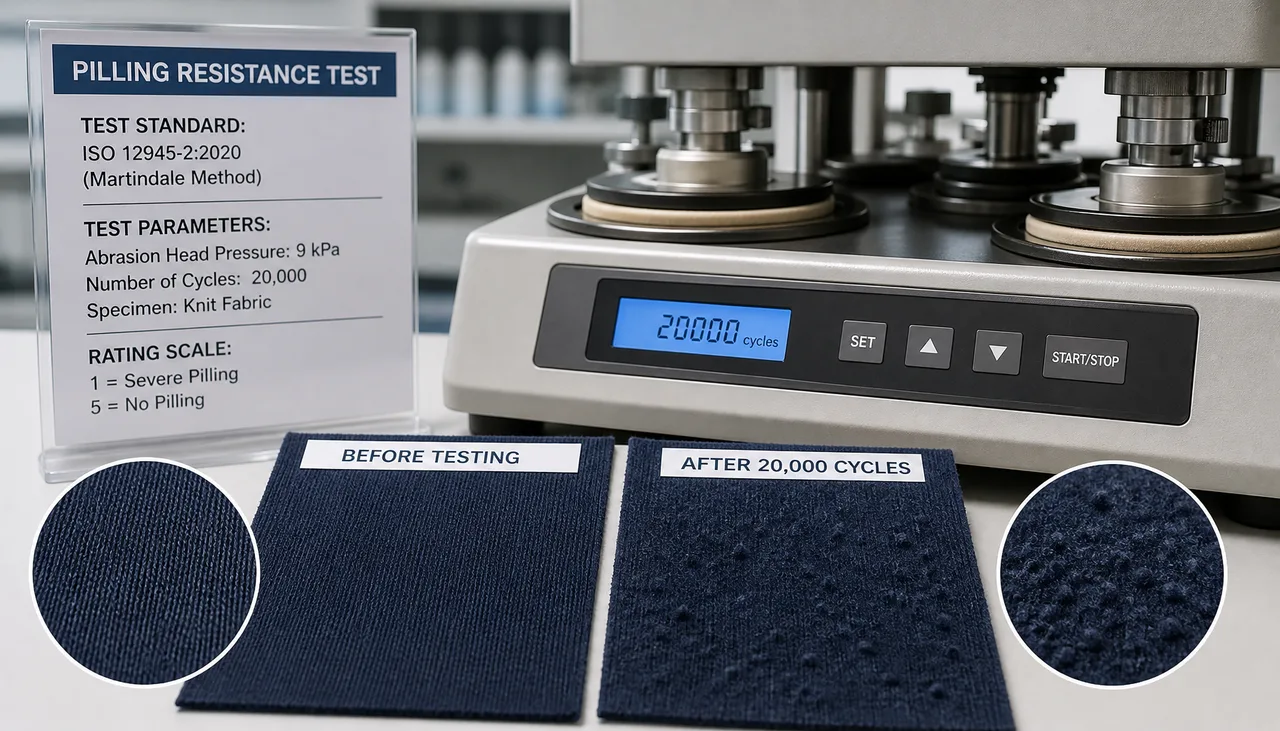
Select a Method That Matches the Contract
Common pilling procedures use different mechanical actions and can produce different rankings. Ask the laboratory to identify the standard and edition, apparatus, loading materials and assessment stages in the quotation and report. If comparing suppliers, submit specimens to the same laboratory under the same method where practical. Results from different procedures should remain separate even when both use a five-grade appearance scale. ISO 12945-2 (Martindale) and ASTM D4970 are common routes; the report must identify the standard, edition and apparatus because grades are not interchangeable across methods.
Control Specimen History
Tell the laboratory whether fabric is tested as received, after specified laundering or after another conditioning step. Identify face and back, color, finish, lot and specimen orientation. Applied softeners, brushing and other surface treatments can change fiber movement and pill formation. A result from an untreated development sample should not be presented as evidence for a differently finished bulk quality.
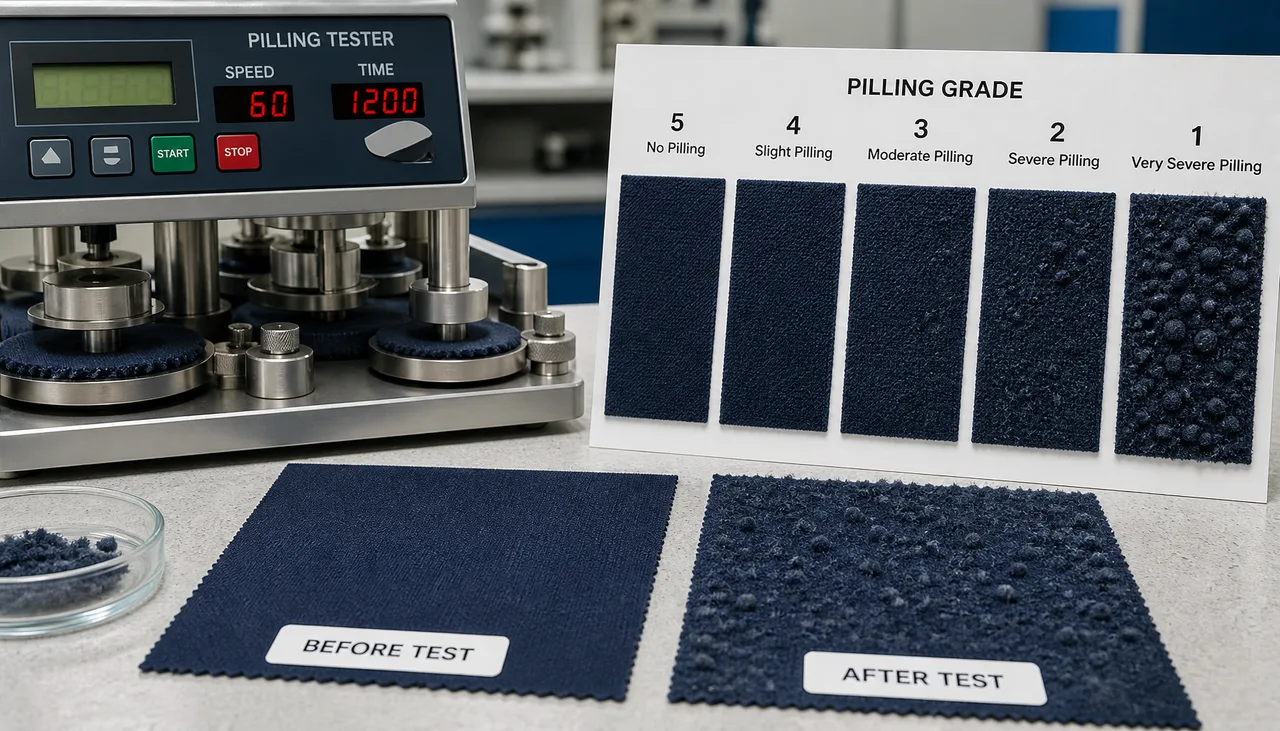
Request More Than a Final Grade
The report should include individual specimen ratings, agreed intermediate stages, photographs where available and any deviation from the method. Ask whether assessment was completed by trained observers under the specified viewing conditions. A shipment decision based only on an average can hide one weak specimen, so the buyer should state whether acceptance applies to every specimen, a median, or another agreed rule. For a related surface test, see how many samples buyers should test for snag resistance.
Connect the Test to the Garment
Pilling exposure differs between a polo shoulder under a bag strap, leggings at the inner thigh and a lightly worn fashion panel. Define the contact zone, expected wear and visual quality level before choosing acceptance criteria. Laboratory testing accelerates a controlled mechanism; it does not predict an exact number of wears. Garment trials remain useful when seams, body contact or mixed materials create additional friction.
Laboratory Request Fields
- Fabric quality, lot, color, face and finish
- Test standard, edition and apparatus
- Preconditioning and laundering state
- Specimen count and orientation
- Exposure or cycle stages
- Rating scale and assessment conditions
- Individual results, summary and photographs
- Buyer-defined acceptance rule
Procurement Decision
Retain the tested sample and original report with the approved specification. If composition, yarn, construction, brushing, softening or another surface finish changes, review whether the earlier result remains representative. ClothFactory can provide traceable samples for testing through the contact page, but the buyer and laboratory must agree on the method and acceptance condition before results are used to approve bulk production or support a durability claim.