
Perforated Breathable Nylon Spandex Fabric is a 170 g/m² nylon-spandex knit (83% nylon, 17% spandex, 165 cm nominal width) intended for activewear zones where air exchange and low bulk are priorities. The perforated appearance is a design feature, not evidence of airflow. Buyers still need controlled tests for air permeability, drying behavior, stretch recovery and durability before making ventilation or comfort claims.
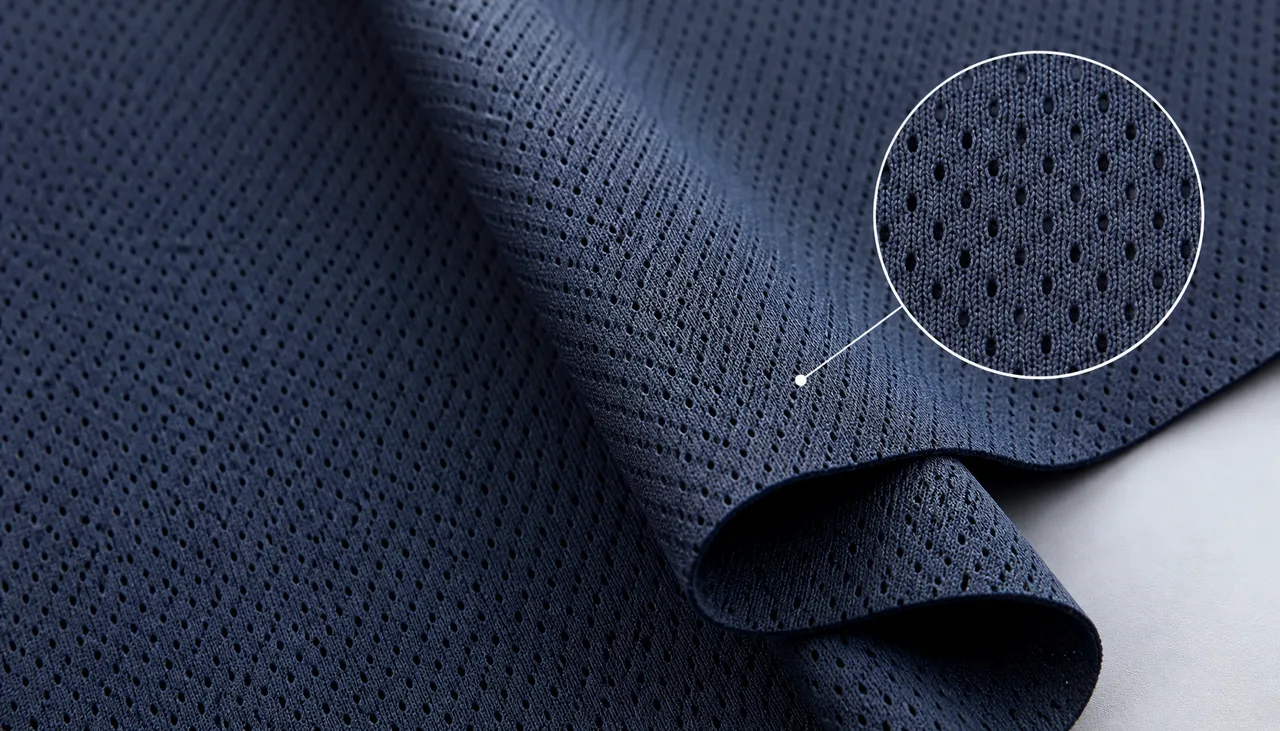
Choose the Garment Zone First
Micro-perforated fabric can be considered for training-shirt bodies, ventilation panels, sports-bra inserts and other areas exposed to heat and perspiration. The correct placement depends on coverage, support and abrasion requirements. Catalogue values are nominal; confirm finished GSM, hole pattern, repeat direction and usable width on a production-equivalent sample. A fabric suitable for an upper-back panel may not provide enough opacity or stability for a high-tension lower-body application, even when both products are described as activewear.
Define Airflow as a Measurable Requirement
Visible holes do not quantify airflow. Ask for the test method, specimen condition, pressure differential and reported unit when comparing air-permeability results. Values obtained under different methods or pressure settings are not directly comparable. If quick drying is also required, evaluate it separately because air permeability, liquid spreading and drying rate describe different moisture-transfer mechanisms. Related training-shirt options are described in custom fabric options for high-performance training shirts.
Check Stretch Around the Perforations
Perforations concentrate strain along their edges. During sampling, examine whether openings elongate unevenly, remain enlarged after extension or initiate snagging and laddering near seams. Record stretch and recovery in both directions under one agreed procedure. The sample should also be inspected after the intended wash and drying sequence because heat and finishing can change dimensions and surface response.
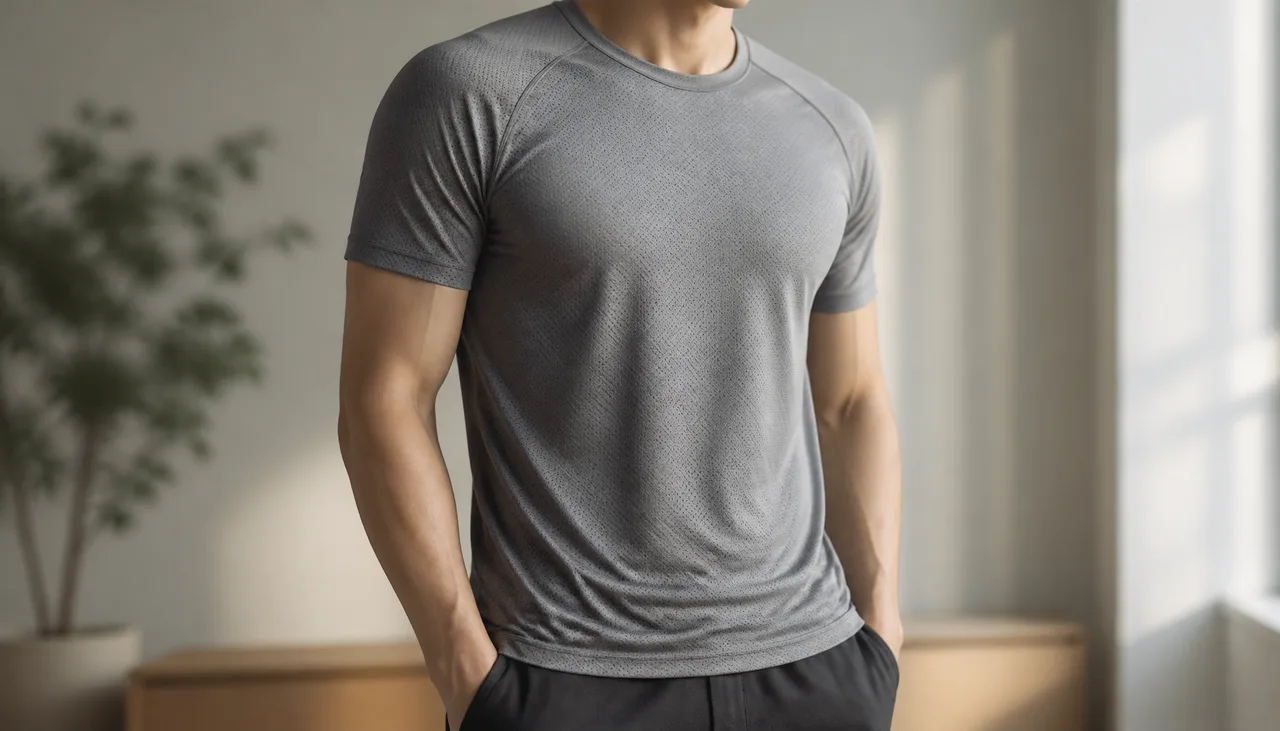
Balance Ventilation, Coverage and Yield
A more open structure can improve airflow while reducing visual coverage and increasing sensitivity to pattern placement. For an illustrative garment review, stretch the candidate to the extension measured at the intended body zone and place it over the planned lining or skin-tone reference. This does not replace a formal test, but it exposes whether ventilation has been gained at the expense of opacity or seam stability.
Buyer Risk Check
- Do not translate “micro-perforated” directly into a breathability claim.
- Confirm usable width and whether edge distortion reduces marker efficiency.
- Check needle selection and seam type on the actual fabric.
- Evaluate abrasion and snagging at raised or open areas.
- Verify optional wicking, cooling or antibacterial finishes separately and after the agreed laundering condition.
Sampling Brief
Provide the garment type, panel location, target GSM, usable width, stretch directions, coverage requirement, color, finishing request and care procedure. Define which results must be tested on fabric and which must be confirmed on a sewn prototype. Submit the brief through the contact page so ClothFactory can evaluate the fabric against it rather than relying on the product name as proof of performance.