
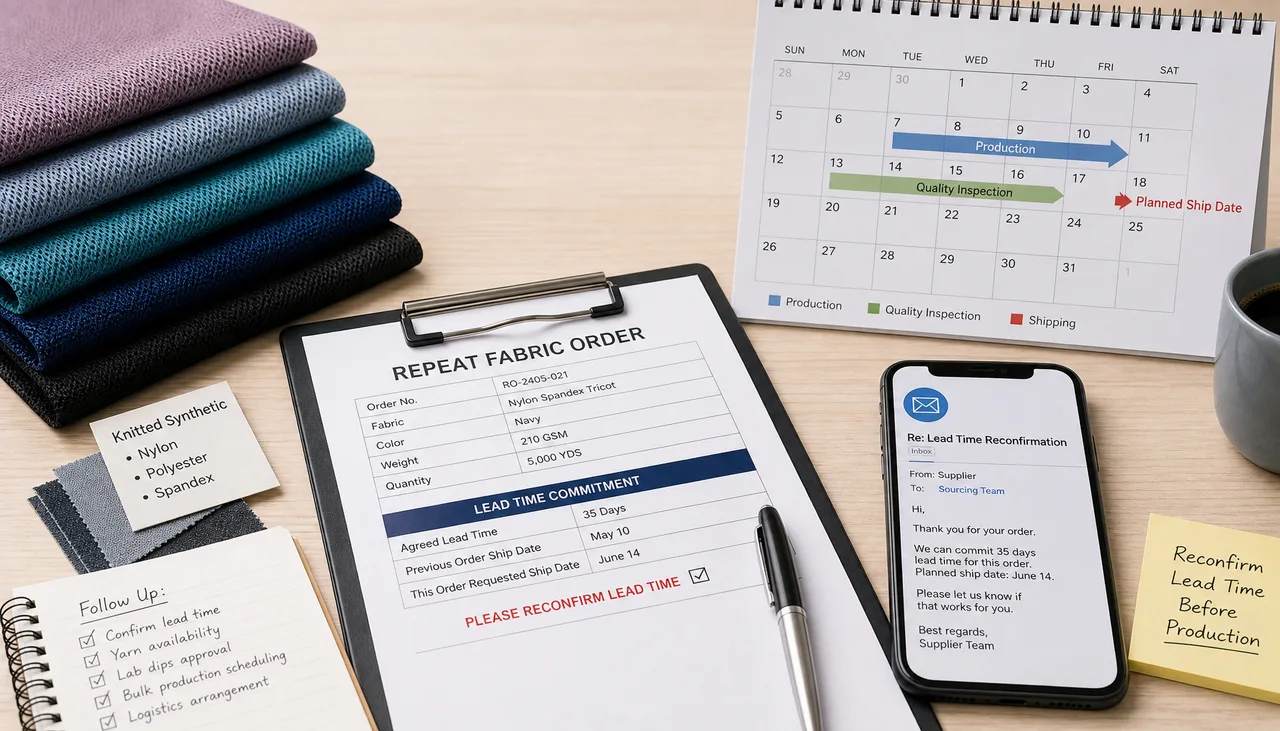
Lead time should be reconfirmed before every repeat fabric purchase order and again after any change to quantity, color, construction, finishing, testing, raw-material availability or required ship date. A previous delivery is useful history, but it is not a current commitment because capacity, material allocation and approval requirements can change between order cycles.
Before the Purchase Order
Request a dated commitment based on the exact quality, color breakdown, quantity, finish, tests and delivery term. Separate supplier production time from buyer approval time, logistics and customs. Ask which date starts the clock: deposit, purchase order, color approval, greige allocation or another event. Without a defined start point, two parties can agree on the same number of days while expecting different delivery dates.
After Any Specification Change
A “repeat” order stops being operationally identical when the buyer changes shade, width, GSM, hand feel, finish, packaging or testing. Even a familiar color may need a new dye lot or lab dip. Send a revised specification and require the supplier to confirm material availability, process route and schedule again. Do not rely on the original quotation after the technical basis has changed. The risks that shape a first quotation are covered in assessing the minimum order quantity policy.
At Approval and Production Gates
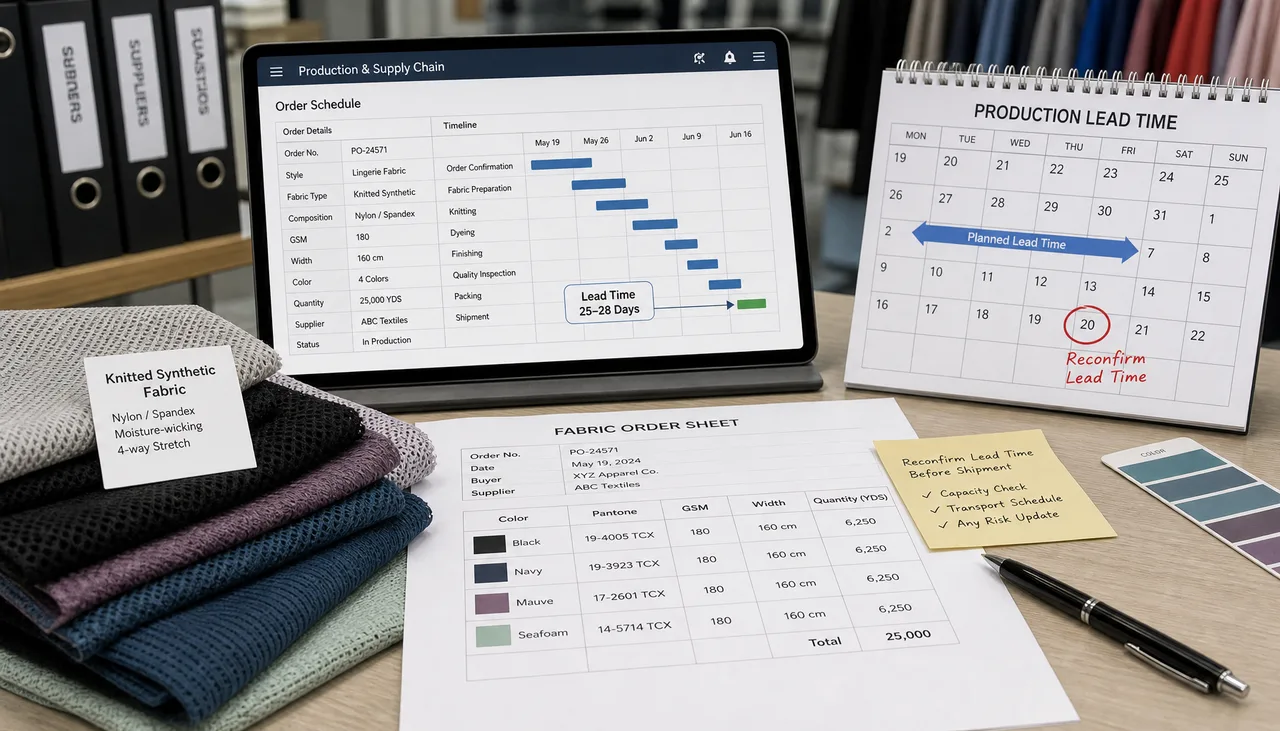
Reconfirm the remaining schedule when color or production samples are approved, when bulk knitting or dyeing begins, and before shipment booking. These checks do not replace the original commitment; they expose changes early enough to protect the garment plan. Request actual milestone dates rather than a general statement that production is “on schedule,” and record who owns any delayed approval. Current capability should also be checked against what buyers should verify in a nylon-spandex manufacturer.
When Demand or Supply Conditions Shift
Quantity increases can require more yarn or another production slot, while reductions can fall below the conditions used for the original plan. Holidays, maintenance, constrained yarns, finishing capacity and transport disruption can also change availability. Ask the supplier to identify the current constraint and recovery plan. An earlier promise should not be silently reused when known conditions have materially changed.
Lead-Time Record
| Milestone | Date or condition to record |
|---|---|
| Order accepted | Technical and commercial confirmation complete |
| Materials secured | Yarn or greige allocation confirmed |
| Color approved | Lab dip or production shade signed |
| Bulk processing | Knitting, dyeing and finishing windows |
| Quality release | Tests and roll inspection complete |
| Dispatch | Booking, handover and delivery term |
Buyer Risk Check
- Keep approval time separate from supplier processing time.
- Reconfirm after changing colors or finishes.
- Require a revised date when a milestone slips.
- Link the commitment to the exact purchase order revision.
- Check logistics availability before declaring the launch protected.
- Do not assume repeat color means ready stock.
Repeat-Order Action
Send ClothFactory the prior order reference together with the new quantity, color plan, specification revision, tests and required delivery date through the contact page. Request a fresh milestone schedule and document any assumptions. The repeat order should be released only after technical equivalence and current capacity are confirmed; familiarity with the product reduces review work but does not remove supply risk.