
Custom activewear fabric should not enter development until MOQ, lead-time assumptions and color approval responsibilities are confirmed for the specific construction and finishing route. These three variables interact: increasing the number of colors can divide volume below a workable dye-lot quantity, while color corrections or added finishes can extend the schedule beyond the buyer’s launch plan.
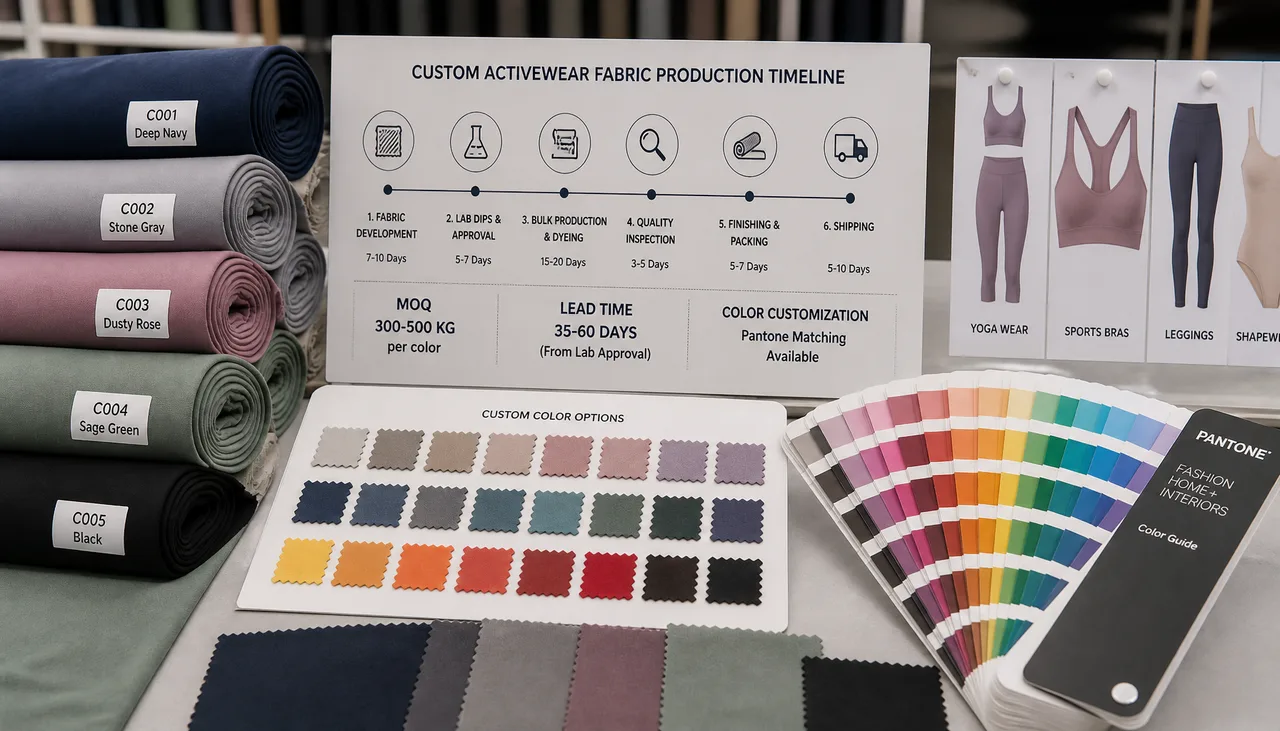
Treat MOQ as a Production Condition
MOQ may be stated by fabric quality, color, dye lot, weight or length, so a single headline number is not enough. Ask whether the quoted minimum applies to one color and one finishing route, and whether greige, yarn or special chemical commitments create separate thresholds. A buyer dividing one order among several colors must verify each color independently rather than assuming the combined quantity satisfies production conditions. The policy risks are reviewed in assessing the minimum order quantity policy.
Model the Color Plan Before Sampling
Use a simple allocation check before approving a palette. In an illustrative example, a planned order of 900 kg divided equally among six colors gives 150 kg per color; changing to nine colors reduces each allocation to 100 kg. This arithmetic does not establish any supplier’s MOQ, but it shows why a larger total order can still fail a per-color requirement and create surcharges or excess inventory.
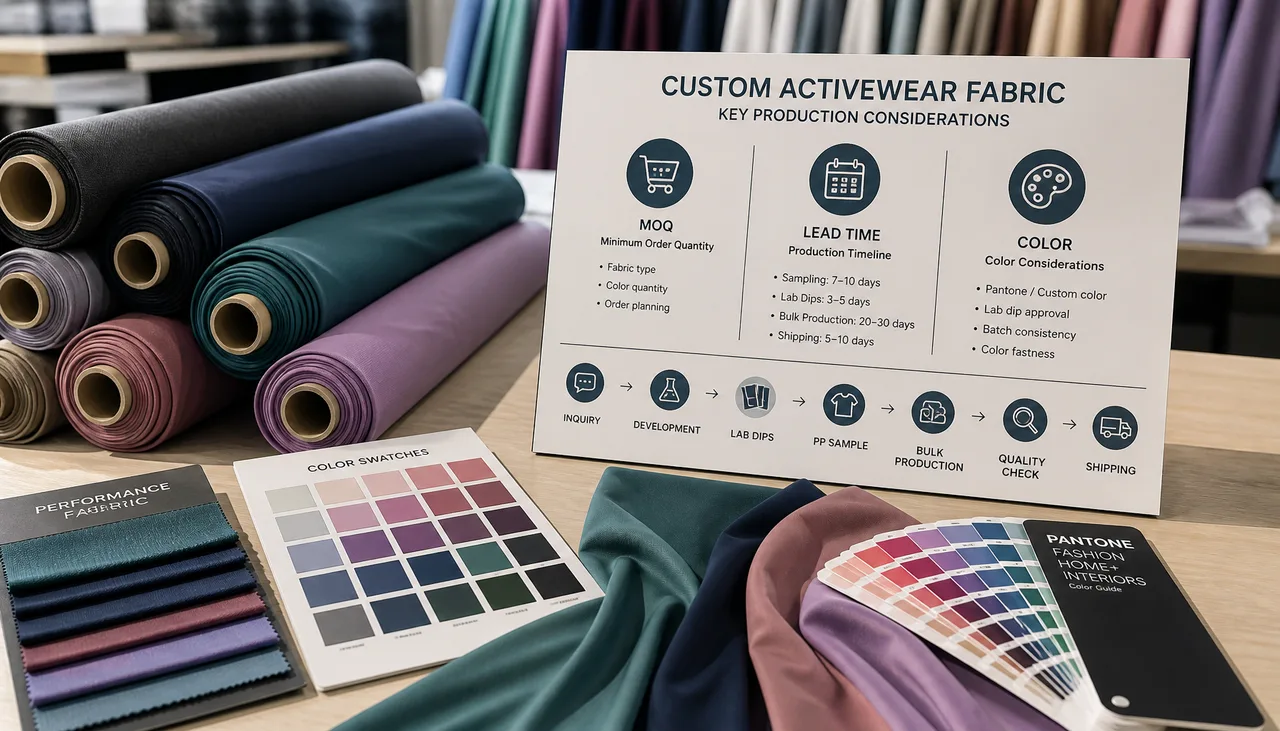
Build Lead Time From Approval Gates
Do not ask only for “days to delivery.” Request a dated sequence covering technical confirmation, sample preparation, lab dip submission, buyer review, corrections, bulk production, inspection and dispatch. Identify which steps can overlap and which begin only after written approval. The delivery commitment should also state what happens when the buyer changes color, construction, quantity or test requirements after sampling has started. Commercial terms should be compared on a like-for-like basis; see comparing fabric quotes when GSM, width and finishing differ.
Define Color Approval Evidence
Name the color reference, substrate, light sources, visual or instrumental tolerances and approval authority. Confirm whether approval applies to a lab dip, sample yardage or bulk dye lot. Stretch fabrics should be assessed relaxed and at the extension relevant to the garment because surface coverage and perceived shade can change under strain. Different fiber blends and finishes may also require separate standards.
Commercial Trade-Offs
Adding colorways can support merchandising but increases the number of approvals, dye lots and shade-control points. Selecting a lower MOQ option may raise unit cost or narrow the available construction and finish choices. A faster schedule may reduce time for corrections and garment testing. Buyers should choose the combination that protects the launch and acceptable-garment cost, not optimize each variable independently.
Buyer Risk Check
- Obtain MOQ in writing for each quality, color and finish.
- Distinguish sample timing from bulk production and shipping time.
- Reserve buyer review time in the calendar.
- Define shade bands and whether mixed shades can enter one garment order.
- Reconfirm lead time after every material change.
- Do not treat a reference color library as proof of ready stock.
Information to Confirm With ClothFactory
Submit the construction, composition, GSM, usable width, finish, target quantity, color breakdown, reference standard, required tests and delivery destination. ClothFactory can then confirm applicable development steps and commercial conditions through the contact page. No MOQ or lead-time value should be treated as fixed until it is tied to that exact requirement and recorded in the quotation or order confirmation.