
An activewear fabric purchase order should state target values, tolerances, measurement methods, sampling rules and remedies for usable width, roll length and GSM. A tolerance copied from another fabric is not automatically suitable; the limits must reflect the approved sample, cutting plan, garment sensitivity and supplier’s demonstrated process capability.
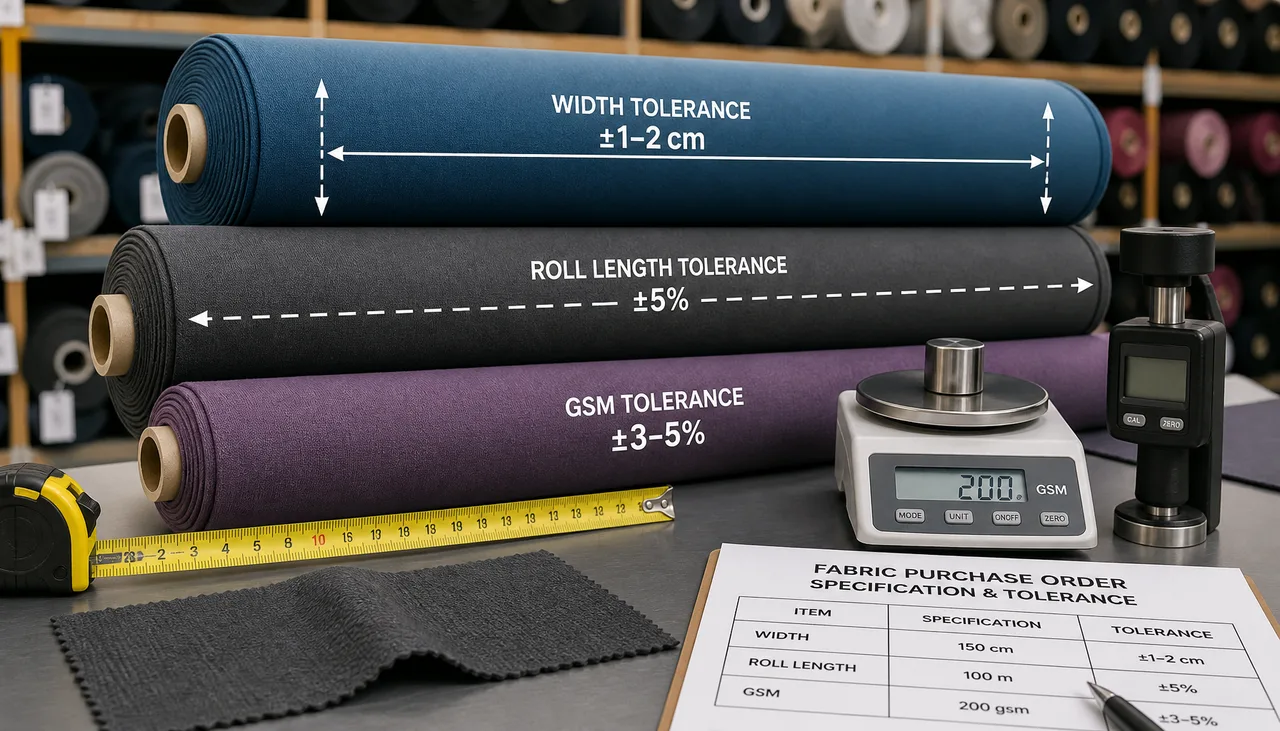
Define Width Before Setting a Limit
State whether the value means total width, cuttable width or usable width after excluding curled, distorted or damaged edges. Also define how the fabric is relaxed, where measurements are taken and how many readings are required per roll. For stretch knits, tension during measurement can create a misleading result, so the agreed procedure matters as much as the numerical tolerance. ISO 22198 covers determination of fabric length and width, and ISO 3801 or ASTM D3776 covers mass per unit area; the purchase order must still define sampling, conditioning and tolerances.
Treat Roll Length as an Inventory Variable
Specify the permitted roll-length range, maximum number of short rolls, minimum piece length, joint policy and how actual delivered length is recorded. Total order quantity alone does not protect cutting efficiency. A shipment can meet total meters while creating excessive handling and end loss if it contains many short rolls, so roll distribution should be an explicit acceptance field.
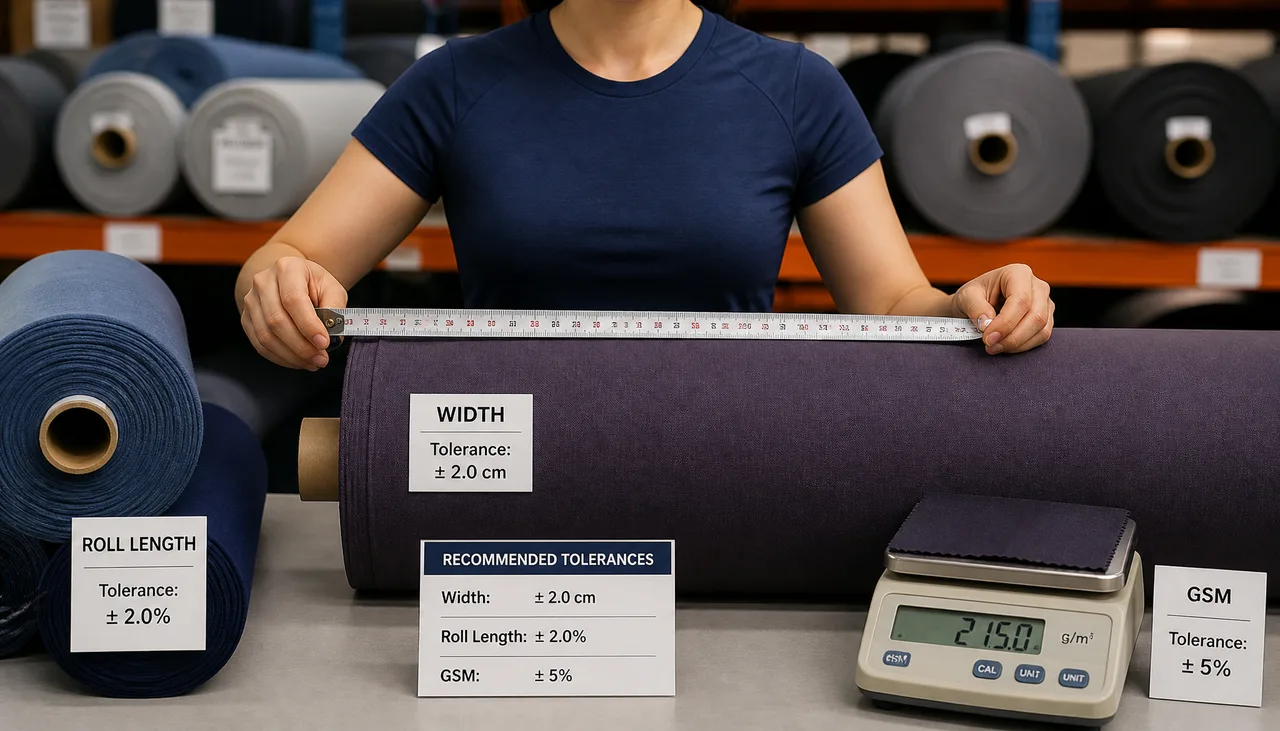
Connect GSM to Garment Risk
GSM affects garment weight, drape, coverage and material consumption, but it does not independently predict stretch or durability. Define specimen size, conditioning, sampling locations and whether the result is reported per reading or as a lot average. An average can conceal rolls outside the approved range, so the purchase order should distinguish individual-roll limits from any shipment-average requirement. For the deposit-stage check, see how to verify GSM tolerance before paying a fabric deposit.
Calculate the Commercial Effect
An illustrative example shows why width matters: if an approved marker requires 1.20 m at a usable width of 160 cm, a roll measuring 156 cm may force a different layout rather than merely creating a 2.5% width loss. The actual consumption increase must be recalculated with the garment pattern. Buyers should therefore connect width tolerance to marker feasibility, not rely on percentage arithmetic alone. The commercial effect is reviewed in comparing fabric quotes when GSM, width and finishing differ.
Purchase-Order Table
| Control item | Purchase order must define | Evidence at receipt |
|---|---|---|
| Usable width | Target, tolerance, relaxation and measurement points | Roll inspection record |
| Roll length | Range, short-roll limit, joints and recording method | Roll ticket and verification |
| GSM | Target, individual and average limits, specimen method | Test report by roll or lot |
| Quantity | Ordered unit, over/under-delivery rule | Packing list and measured total |
| Remedy | Segregation, replacement, credit or written concession | Nonconformance record |
Avoid These PO Gaps
- Do not mix kilograms and meters without an agreed conversion basis.
- Do not call selvage-to-selvage width “usable” unless the full width is cuttable.
- Do not accept unlimited short rolls because total length is correct.
- Do not use a shipment average to hide out-of-tolerance rolls.
- Do not specify limits that were never checked on the approved quality.
Approval Sequence
Agree the measurement procedure during sampling, confirm the values on production-representative fabric and copy the final specification into the purchase order. ClothFactory and the buyer should retain the approved sample and signed data sheet as comparison references; send the final specification through the contact page so both parties work from the same revision. Any departure should require a documented concession before cutting, not a verbal decision after garments have entered production.