
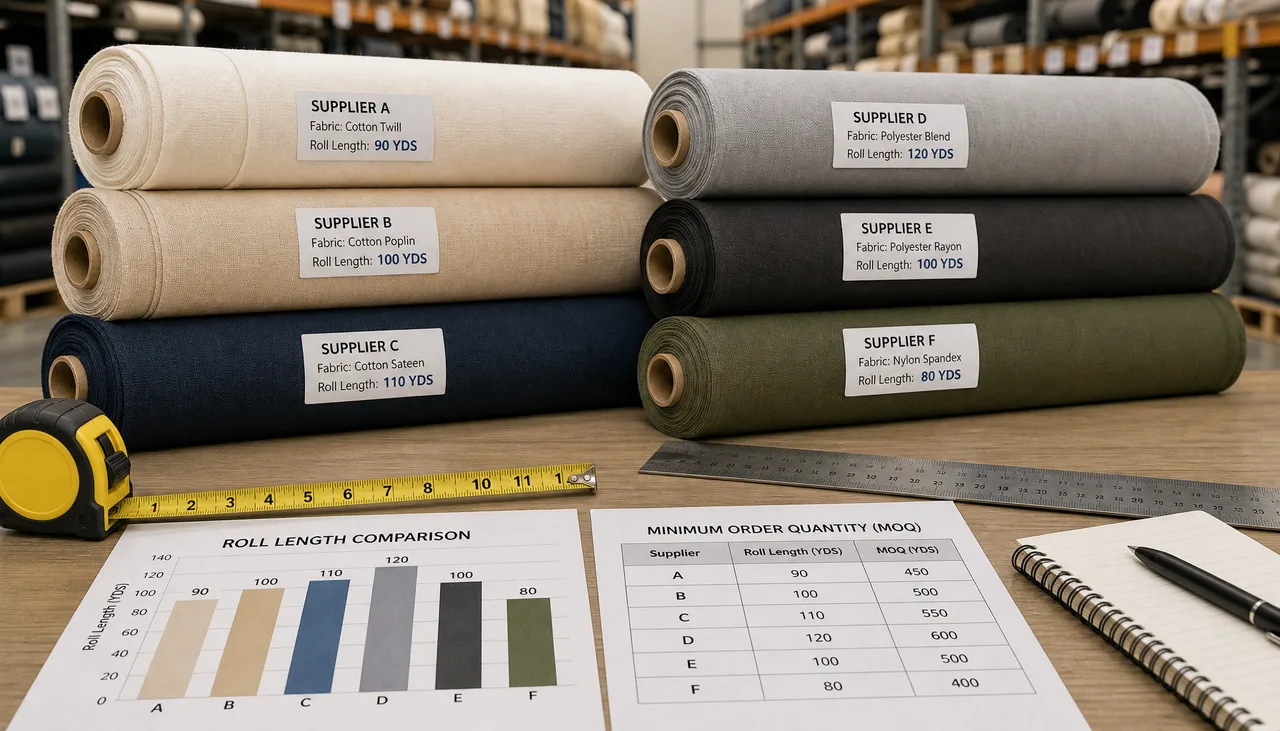
Compare supplier roll-length requirements by normalizing the minimum and maximum roll lengths, short-roll allowance, joints, quantity unit, shade-lot rules and usable yield. MOQ and roll length are different controls: MOQ governs total production commitment, while roll distribution affects cutting efficiency, handling and the amount of fabric lost at each roll end.
Ask for the Roll Distribution
A supplier quoting 1,000 meters may deliver ten 100-meter rolls or a mixture of long and short rolls. Those shipments have the same total length but can produce different spreading labor and end loss. Request the expected roll-length range, maximum proportion of short rolls, minimum acceptable piece, joint policy and packing method. Define whether the supplier needs buyer approval before shipping an exceptional short roll. Where length is verified, ISO 22198 provides a method for determining fabric length and width; the purchase order should still state sampling, tolerance and the measurement device.
Keep Units Comparable
Suppliers may quote or sell stretch fabric in kilograms, meters or yards. Conversion requires measured GSM and usable width for the specific quality; nominal figures can distort the result. Use verified data and retain the calculation basis. Do not describe an MOQ in kilograms as though it were the length of one roll, because a production quantity can be divided among many rolls.
Calculate End Loss
An illustrative example: if a cutting process loses 0.6 meter at each roll end, ten rolls create 6 meters of end loss while twenty rolls create 12 meters, before defects or marker remnants are considered. This is not a universal loss factor; buyers should replace it with factory data. The calculation shows why average roll length belongs in usable-cost comparison rather than being treated as a packing preference. The same usable-yield logic applies when comparing fabric quotes with different GSM, width and finishing.
Include Shade and Defect Constraints
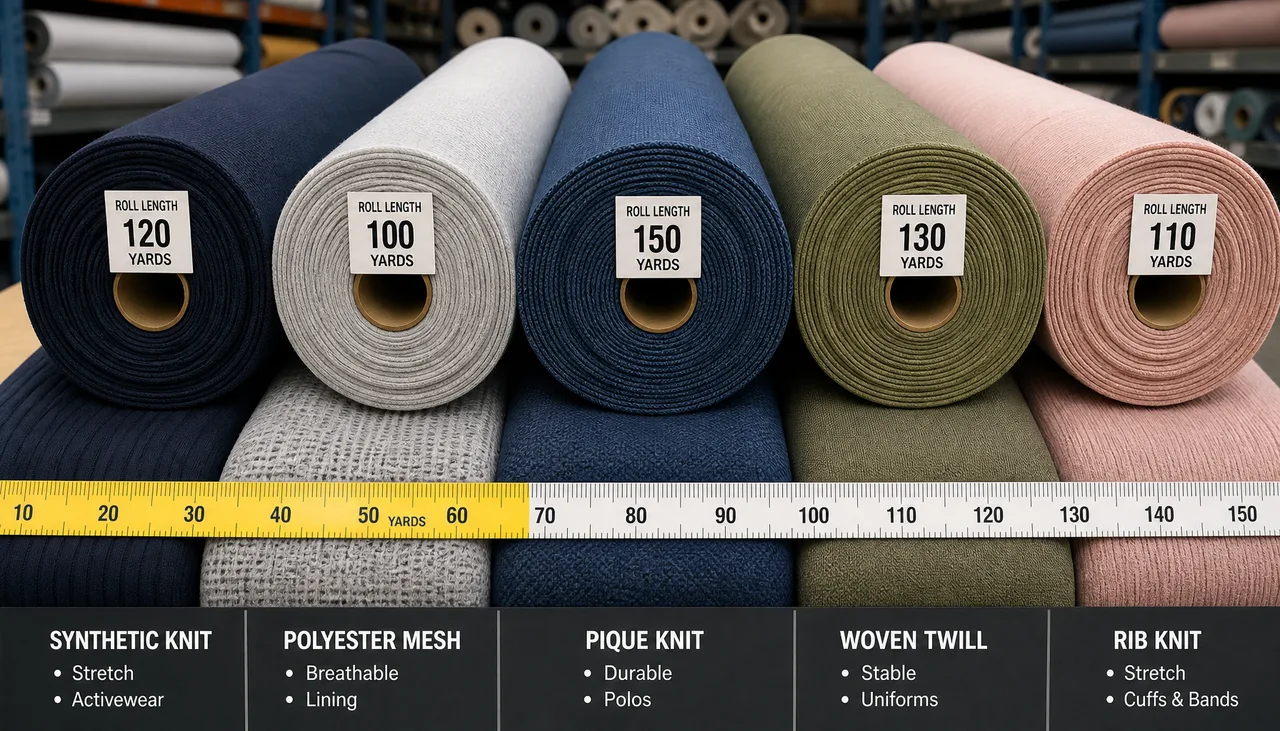
Long rolls are not automatically better if shade varies within the roll or defects interrupt usable lays. Ask how shade lots are separated, how defects are marked, whether measured length includes unusable sections and what inspection system applies. Cutting plans should prevent mixing incompatible shades within one garment while still using roll remnants efficiently.
Comparison Table
| Field | Supplier response required |
|---|---|
| Order unit | kg, m or yd and conversion basis |
| Standard roll | Target and permitted range |
| Short rolls | Minimum length and maximum share |
| Joints | Number, marking and allowance |
| Shade lots | Identification and separation rule |
| Length verification | Measurement method and tolerance |
| Claims | Remedy for shortage or unusable material |
Purchase-Order Decision
Use the garment factory’s spreading limits and historical end loss to set requirements before placing the order. ClothFactory should confirm the planned roll profile for the exact quality, width, GSM, color and quantity rather than reuse a generic figure, and verify the requirement through the contact page. Write the accepted distribution and remedy into the purchase order so receiving inspection can release or segregate rolls consistently. A related deposit-stage check is described in how to verify GSM tolerance before paying a fabric deposit.