
Before requesting fabric samples, an apparel buyer should give the supplier enough information to screen out unsuitable materials. At minimum, define the garment, target construction and composition, GSM and usable width, stretch direction, color, finish, care conditions and tests required for approval; otherwise, receiving many swatches creates activity without producing a comparable sourcing decision.
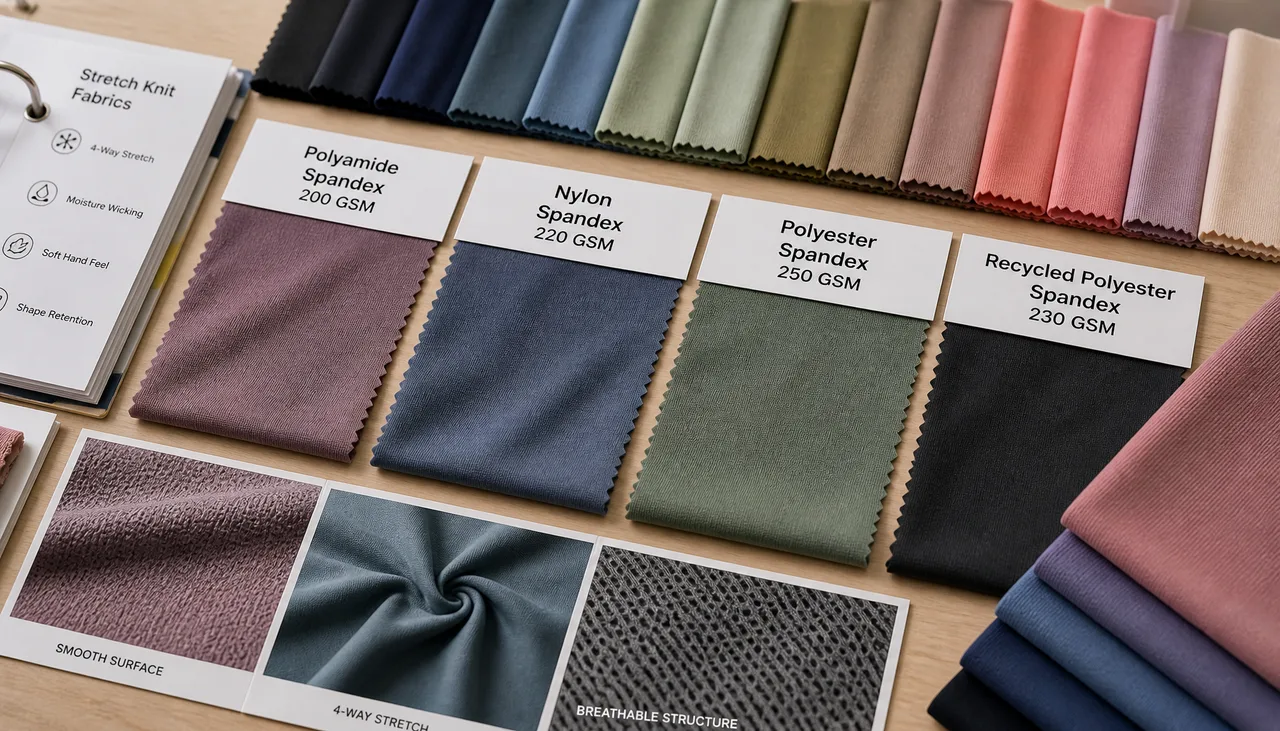
Start With the Garment, Not a Generic Fabric Name
“Fabric for activewear” is too broad for useful sampling. A running shirt, sports bra and yoga legging place different demands on coverage, stretch, recovery, support and surface durability. State the garment zone and expected use, including whether the material touches skin, carries elastic tension, faces repeated abrasion or must remain opaque under strain. This lets the supplier explain why a candidate fits instead of sending whichever swatches are readily available.
Define the Technical Comparison Fields
Ask every supplier to report the same fields: fiber content, knit structure, finished GSM, usable width, stretch and recovery by direction, finishing route and recommended care. Specify whether width is open, tubular, relaxed or usable after excluding unstable edges. Numbers collected under different definitions cannot support a fair comparison, even when they appear in the same spreadsheet.
Separate Core Construction From Optional Finishes
List moisture management, cooling, antibacterial treatment, brushing or other finishing requirements separately from the base fabric. Ask whether each property comes from fiber, structure or an applied finish and how it should be verified after laundering. A swatch with an attractive initial hand feel does not prove that an optional finish will remain effective through the product’s intended care cycle. For finish-related evidence, see comparing supplier reports for moisture management.
Agree on the Sample’s Purpose
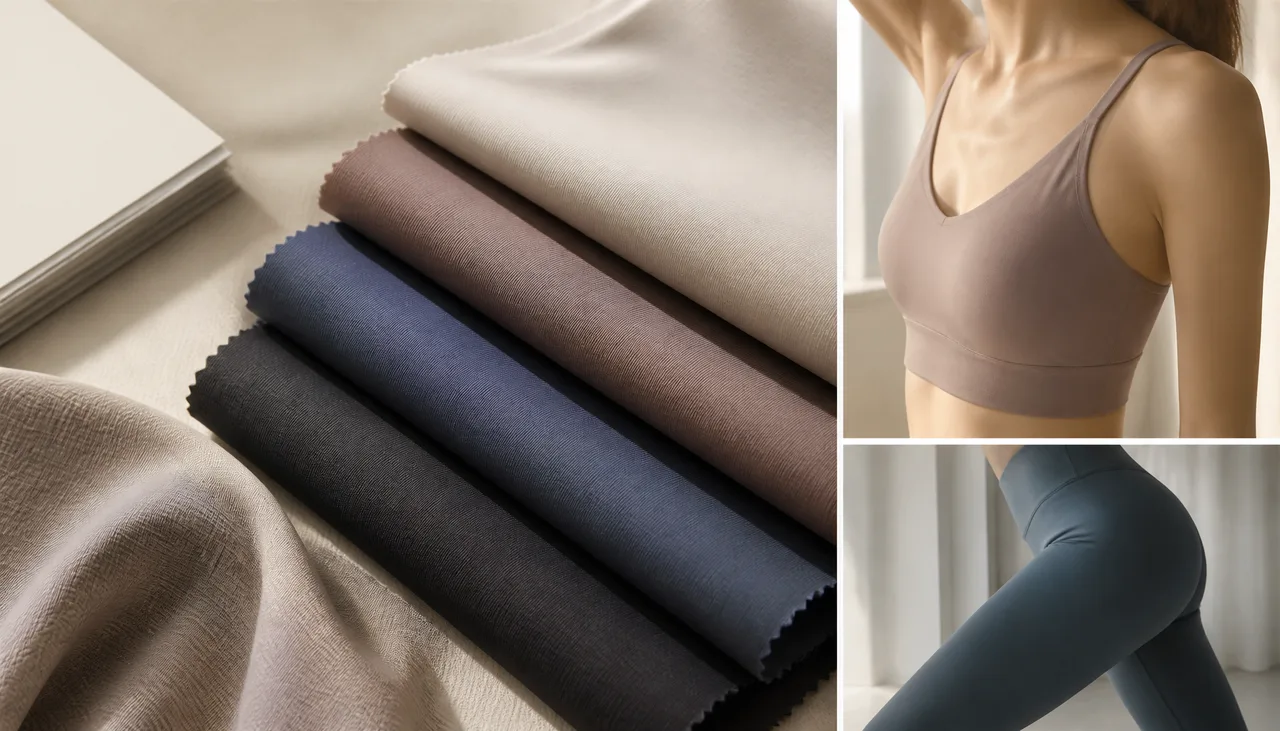
Clarify whether the request is for an available quality swatch, a color lab dip, sample yardage or a production-representative approval lot. These materials answer different questions. A small swatch can confirm color direction and surface character, but it cannot support a full marker, garment wash trial or statistically meaningful bulk inspection. Record what the sample is allowed to approve and which decisions remain open. A sample-yardage plan is compared in how buyers compare sample-yardage plans across fabric suppliers.
Confirm Commercial Conditions Before Development
Ask for MOQ by quality and color, sample charges, development charges, estimated sampling sequence, bulk lead-time assumptions, payment terms and how repeat colors are controlled. Do not rely on a generic MOQ copied from another fabric because yarn availability, dyeing route, color and finishing can change the production threshold. Request written confirmation for the specific quality and color plan under review.
Sample Request Checklist
- Garment type, target consumer and use conditions
- Composition, knit structure, GSM and usable width targets
- Stretch direction, recovery, coverage and hand-feel requirements
- Color standard and approval method
- Optional finishes and durability conditions
- Required fabric and garment tests
- Expected order quantity and color breakdown
- Sample type, quantity and decision deadline
Approval Gate
Issue one written sample brief and assign a reference to every received candidate. Record deviations instead of silently accepting them, then move only technically suitable materials into garment sampling. ClothFactory can use this information, submitted through the contact page, to match existing options or discuss development, while the buyer retains a traceable record connecting the original requirement, physical sample, test results and eventual bulk approval.