
A pre-production fabric approval sample should confirm the exact construction, color, finish and measurable properties intended for bulk production. Buyers should approve it against a signed specification and recorded test conditions, not by appearance and hand feel alone, then identify which characteristics still require bulk-lot verification.
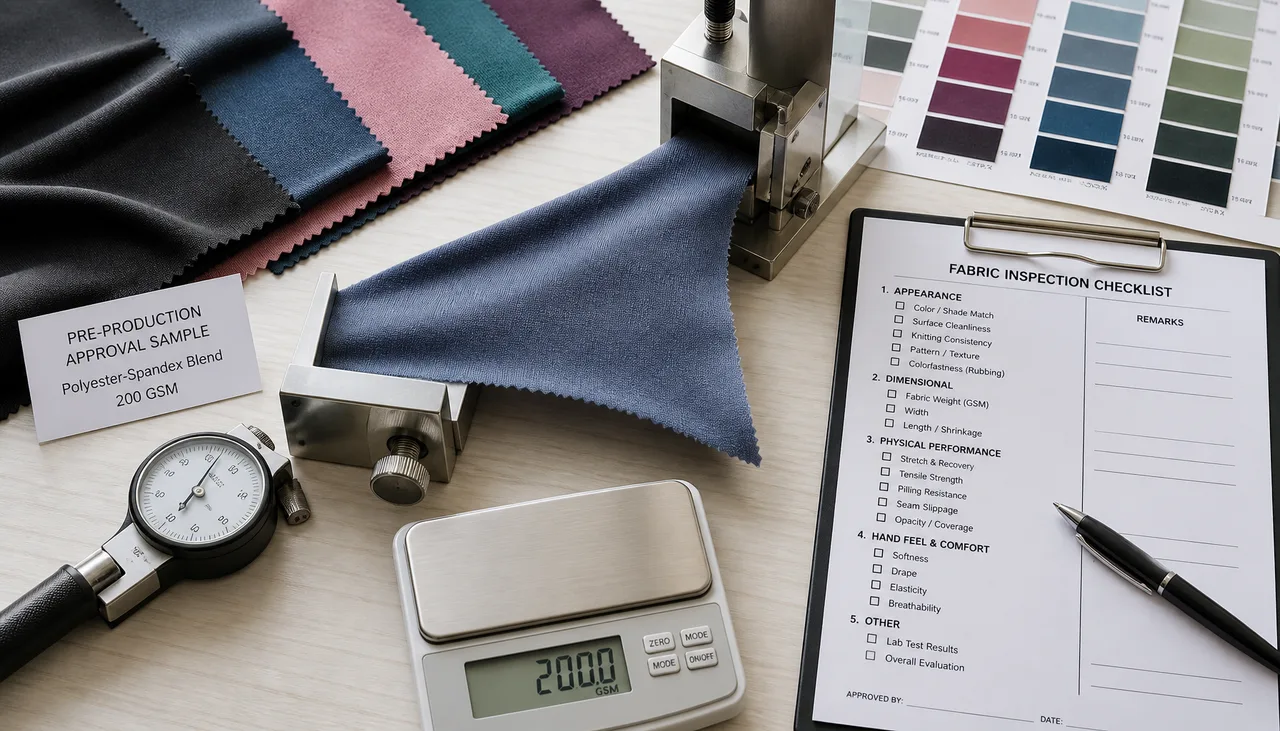
Confirm Sample Identity
Record the supplier, quality name, composition, knit structure, color, dye-lot or sample reference, finishing route and date received. Ask whether the sample was made on the intended production route and whether any yarn, machine or finish will change in bulk. A sample cannot serve as a reliable standard when its origin is unclear or when the supplier expects to substitute critical inputs after approval. The approval sits inside the wider sequence described in what happens between fabric sampling and bulk-production approval.
Measure Construction and Dimensions
Verify finished GSM, usable width, appearance, thickness where relevant, and stretch and recovery in both directions. Define conditioning and measurement procedures so the numbers can be repeated on bulk fabric. For highly extensible knits, width and GSM should be measured without uncontrolled tension. Record individual observations rather than only writing “approved,” because bulk inspection needs objective comparison points.
Review Color and Surface
Compare shade with the agreed physical reference under specified lighting and inspect relaxed and stretched fabric. Check bow, skew, barre, creases, holes, contamination and uneven finishing. If several garment panels must match, establish shade grouping rules before cutting. Digital photographs can document the review, but they should not replace physical color approval because cameras and displays alter color.
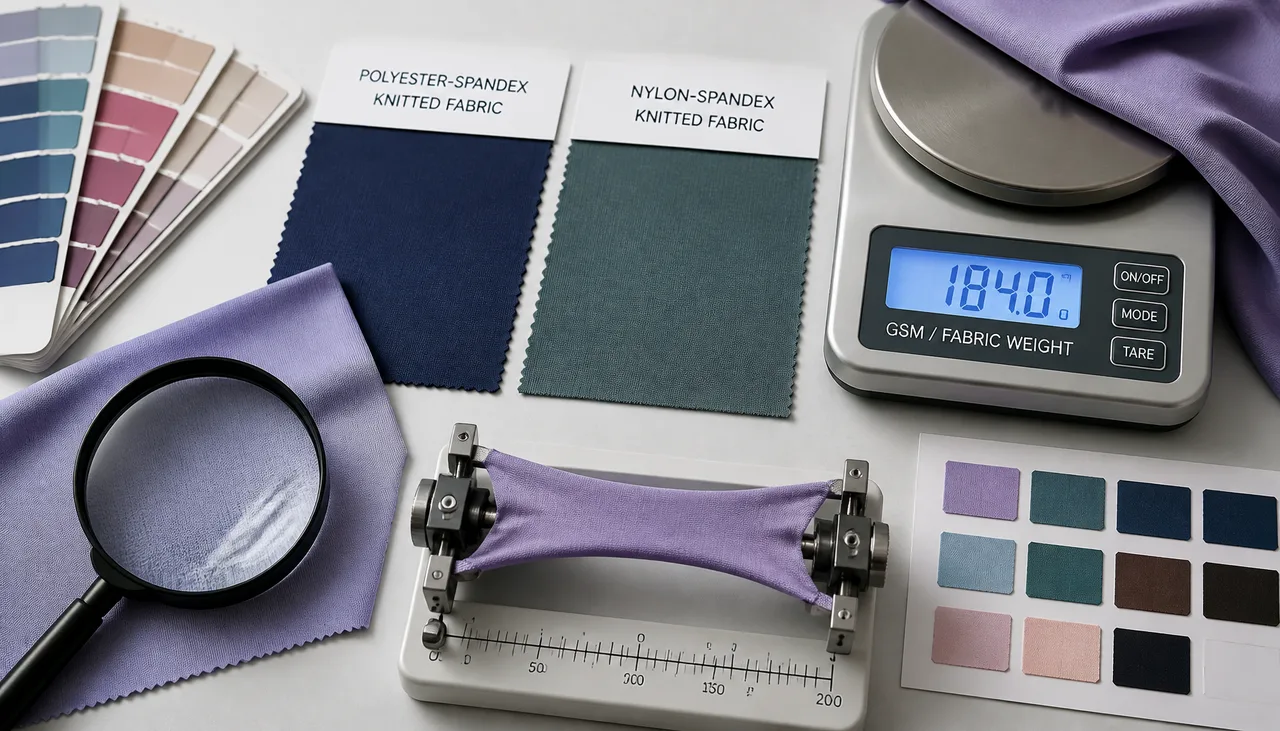
Test End-Use Performance
Select tests from the garment risk assessment. Close-fitting activewear may require dimensional stability, colorfastness, stretch recovery, pilling or abrasion, opacity under strain and seam compatibility. Moisture, cooling or antibacterial claims need separate methods and durability conditions. The test report should identify the specimen, method, unit and result; a pass statement without those fields cannot support later comparison. For the verification step, see how to verify GSM tolerance before paying a fabric deposit.
Validate in a Sewn Prototype
Use production-intended thread, needle, seam and elastic where possible. Evaluate fit, seam grin, puckering, edge curl, recovery, coverage and appearance after the planned wash and drying sequence. Fabric-level approval does not guarantee garment performance because pattern strain, panel direction and sewing tension change how the material behaves. Record any construction restrictions with the approved sample.
Approval Record
- Physical sample reference and retained piece
- Signed specification with tolerances
- Color standard and lighting conditions
- Test reports and laundering conditions
- Garment trial observations
- Approved deviations or open actions
- Bulk inspection and release requirements
Release Decision
Approve, reject or approve conditionally in writing. Conditional approval should name the unresolved item, responsible party and deadline before bulk cutting. ClothFactory and the buyer should retain matching records so that bulk fabric can be traced to the same construction and finish; send the signed approval record through the contact page. If a critical input changes, request a new approval sample instead of treating the original signature as permanent authorization.