
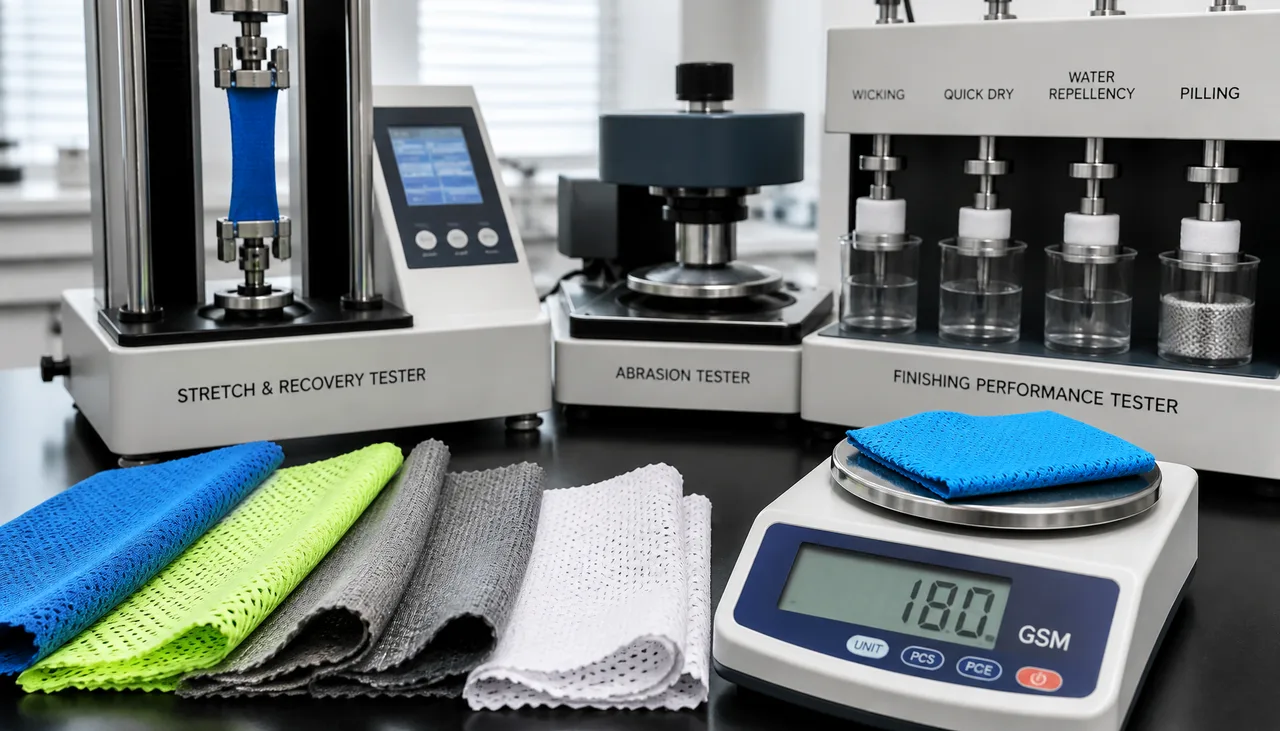
Running-shirt fabric should be approved through tests tied to heat, perspiration, repeated washing, skin contact and garment construction. The minimum plan normally covers composition and construction, GSM and usable width, dimensional stability, colorfastness, surface durability and the specific moisture or airflow claims the brand intends to make; optional claims require their own verified methods.
Establish the Base Specification
Confirm fiber composition, knit structure, finished GSM, usable width, appearance and any finish before performance testing. These fields identify what was tested and allow bulk comparison. If the shirt requires mechanical stretch, record stretch and recovery by direction under an agreed procedure. Related training-shirt options are described in custom fabric options for high-performance training shirts. Do not assume an elastane percentage predicts recovery, because yarn type, stitch density, heat setting and finishing influence the result.
Test Care and Appearance Stability
Specify the intended wash and drying procedure, then measure dimensional change and inspect twisting, skew, puckering and surface appearance. Add colorfastness tests relevant to laundering, perspiration, rubbing and any color-transfer risk in the garment. Typical routes include ISO 6330 and ISO 3759 for dimensional change, and ISO 105-C06, ISO 105-E04 and ISO 105-X12 for laundering, perspiration and rubbing colorfastness; confirm the current editions and the agreed acceptance values. Bright and dark shades may behave differently, so one development color should not automatically approve the entire range.
Define the Moisture Question Precisely
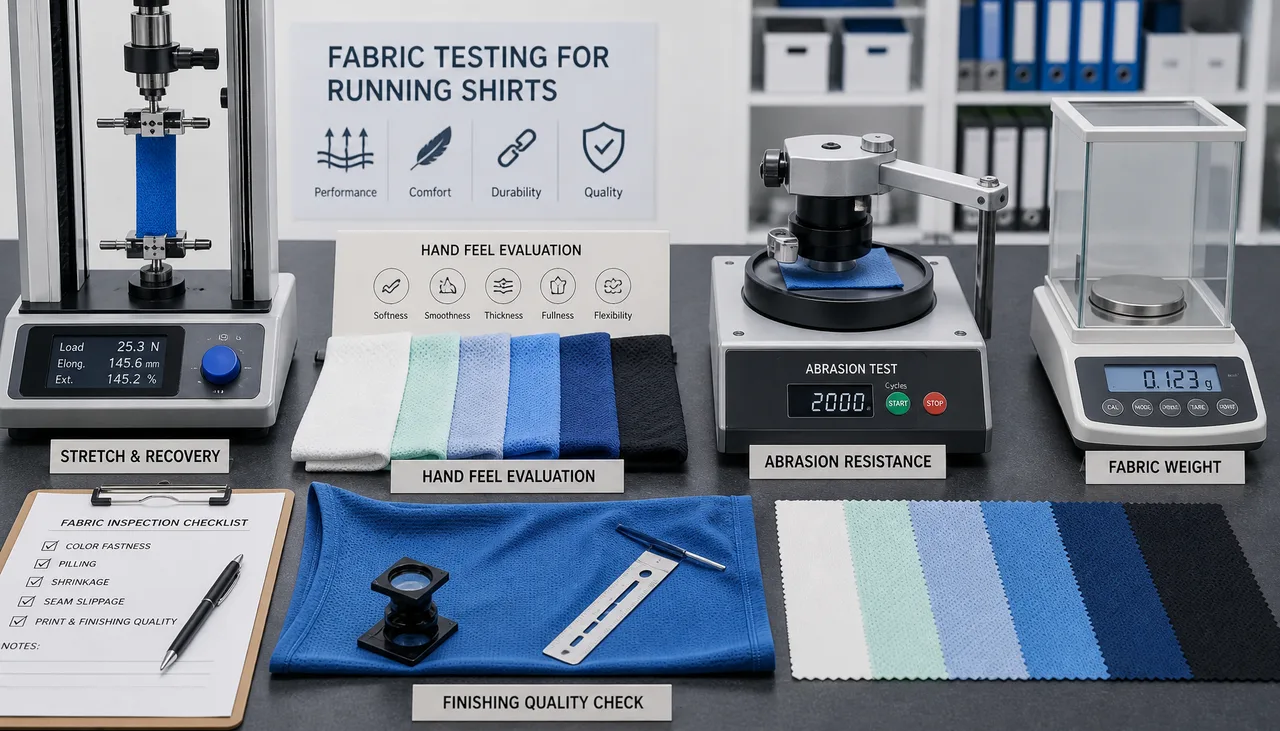
“Moisture management” can refer to liquid spreading, transfer through the fabric, drying rate or another mechanism. Select the measure that supports the product claim and record method, specimen state, unit and acceptance rule. Air permeability is also distinct from drying; ISO 9237 or ASTM D737 can quantify it under a stated pressure differential. Comparing candidates tested under different airflow, humidity, water dose or pressure conditions can produce a confident-looking table with no valid conclusion. For the reporting check, see comparing supplier reports for moisture management.
Assess Surface and Sewing Durability
Choose pilling, abrasion or snagging checks according to expected contact points, then test seam compatibility with planned needle, thread and stitch. Lightweight knits can show needle cuts, seam grin or puckering even when fabric-level durability appears acceptable. A sewn and washed prototype should confirm neckline recovery, underarm comfort, hem appearance and any bonding or print adhesion.
Risk-Based Test Matrix
| Buyer requirement | Evidence to request |
|---|---|
| Stable fit | Dimensional change and recovery data |
| Color durability | Relevant wash, perspiration and rubbing results |
| Low wet discomfort | Defined moisture or drying test |
| Ventilation | Air-permeability test under stated conditions |
| Appearance retention | Pilling, snagging or abrasion result |
| Manufacturability | Sewn prototype and wash review |
Approval Conditions
Request original reports that identify the exact quality, color, finish, method, conditions, units and individual results. ClothFactory can support fabric matching and sample preparation, but acceptance limits belong in the buyer’s specification. Recheck any property affected by a change in construction, color, print, finish or care instruction before releasing bulk fabric. Share the intended test plan with ClothFactory through the contact page before sampling.