
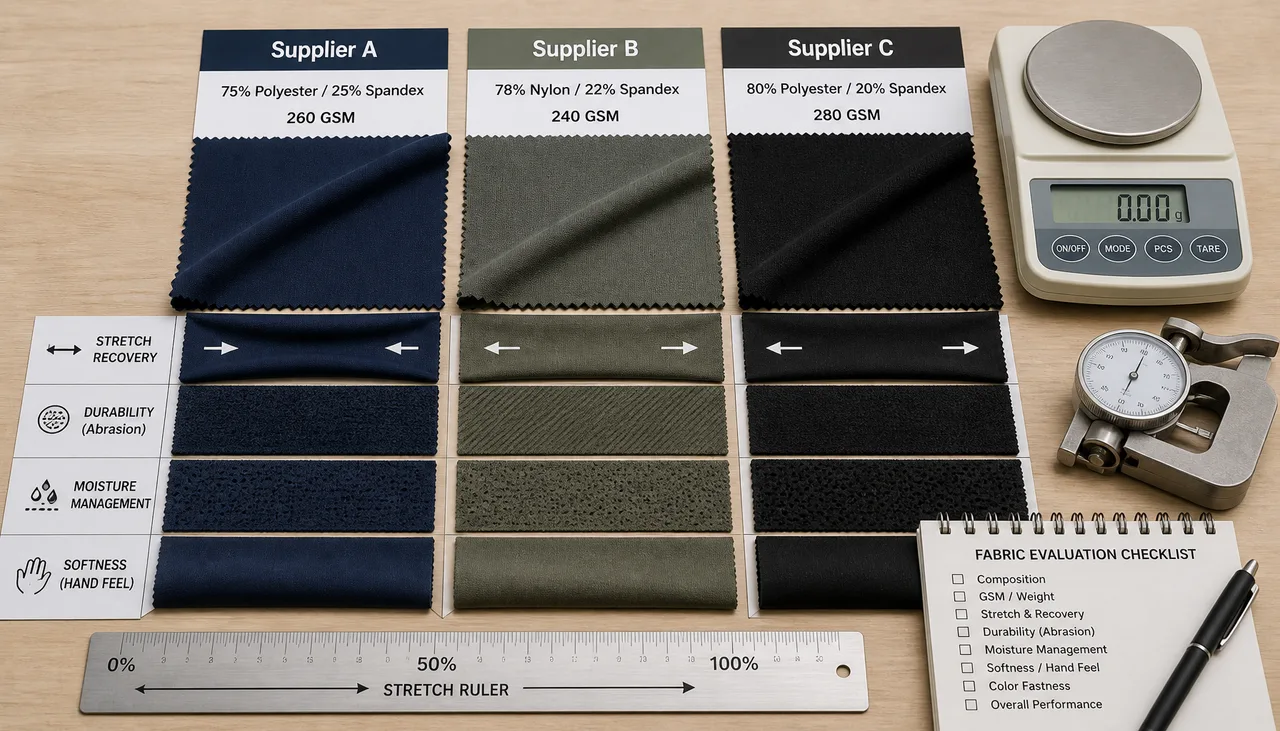
Compare running-tights fabric suppliers through the same specification, sample quantity, test methods and garment trial—not through swatch feel or price per kilogram alone. The preferred supplier is the one that can reproduce coverage, stretch recovery, dimensional stability, shade, usable width and surface durability while documenting the actual cost and risk of bulk production.
Use One Technical Brief
Send every supplier the garment application, target composition and construction, GSM and usable width, stretch and recovery conditions, color, finish, care method and required tests. State the extension at which opacity will be reviewed and whether the tights include brushed surfaces, prints or bonded details. Suppliers cannot be compared fairly when each is allowed to interpret “supportive” or “squat-proof” differently. A comparable brief for yoga leggings is set out in comparing yoga-legging fabric suppliers.
Compare Measured Performance
Request results for dimensional stability, stretch and recovery by direction, colorfastness and application-specific surface durability. Check method, conditioning, units and specimen state before placing values in one table. A higher number is not automatically better: excessive stretch with weak recovery can create knee or seat growth, while a firm fabric can restrict movement even if its relaxed hand feels substantial.
Test Coverage on the Intended Color
Opacity depends on construction, yarn, color and strain. Use the same background, lighting and extension condition for every candidate, then confirm the result in a sewn garment. A dark development sample should not approve a pale production color. For result interpretation, see how to interpret fabric opacity test results. Ask whether different colors require construction or dye adjustments and whether those changes affect GSM, hand feel or delivery.
Calculate Usable-Garment Cost
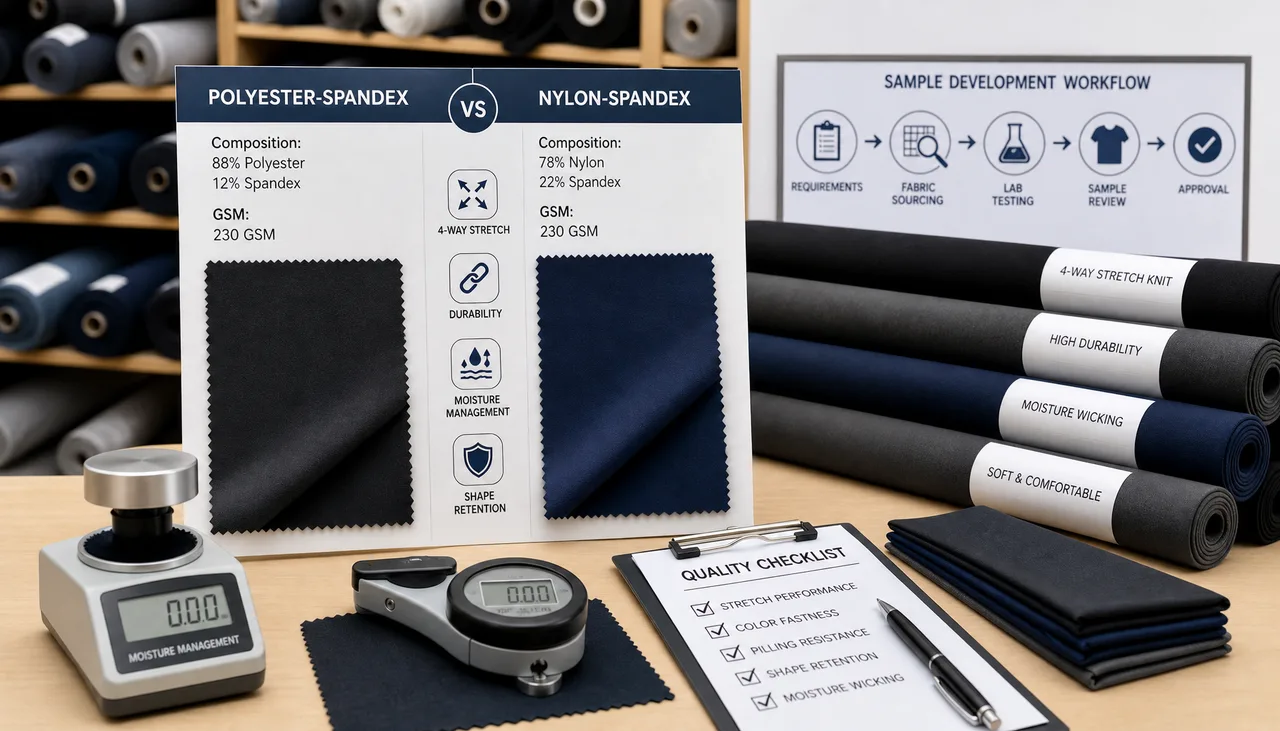
Normalize price to the same unit and include usable width, measured GSM, shrinkage allowance, defect loss, short-roll handling and marker yield. An illustrative comparison: a cheaper fabric that forces a less efficient marker or higher panel rejection may cost more per acceptable garment. Run the same pattern and size ratio on each candidate rather than converting kilograms to meters with unverified nominal data.
Assess Reproduction and Service
Review how the supplier controls yarn, knitting, dye lot, finishing, shade grouping and roll inspection. Ask for a dated sample-to-bulk workflow and the process for nonconforming material. Communication speed matters only when answers are technically complete and recorded. A supplier that confirms limitations early is less risky than one that promises every function without test conditions.
Supplier Scorecard
| Area | Comparison evidence |
|---|---|
| Application fit | Sewn prototype and movement review |
| Performance | Comparable raw test reports |
| Coverage | Same color, strain and lighting condition |
| Yield | Marker using verified usable width |
| Consistency | Bulk-control and inspection records |
| Commercial fit | MOQ, lead time, price basis and claims terms |
Final Qualification
Advance no more candidates than the team can test under controlled conditions. ClothFactory should receive the same brief through the contact page and be scored against the same evidence as other suppliers. Approve the selected fabric, color and finishing route rather than issuing blanket supplier approval, then retain the specification, sample and reports for repeat-order comparison.